Smart Android And Trik-Commenting on Andorid indeed never endless, because smart devices this one is often updated every certain amount of time. So that the market can always be garapnya menerinya with pleasure. And it is not denied if this device has become the lifestyle of each society. To not wonder if the 6th business information and many are turning to mobail smartphone. With Android which thoroughly dominated the mobile industry, choosing the best Android smartphone is almost identical to choose the best smartphone, period. But while Android phones have few real opponents on other platforms, internal competition is intense.
Introduction
The annual MWC event in Barcelona is almost over, but we can't call it a day before we handle all new Zenfones Asus had in store for us. The event last night brought us a whole bunch of new devices, some of them to be available in different variants in a typical Asus fashion. The notorious notch made an appearance, too, and it's shaping to be the next trendy thing after the "full-view" screens.
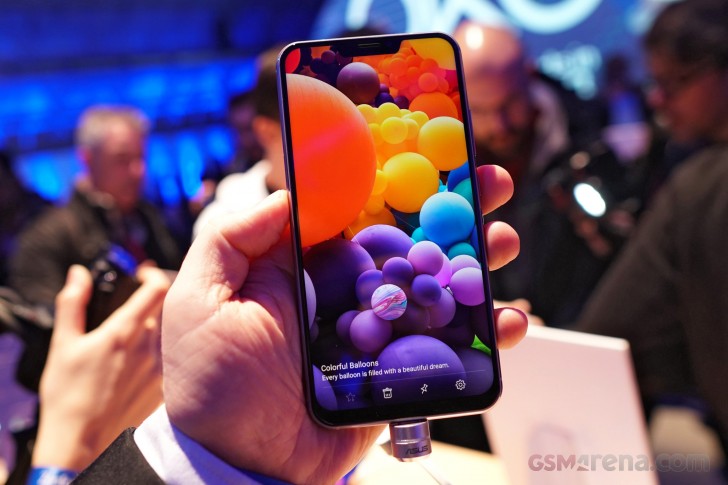
Asus brought the Zenfone 5, 5z, and 5 Lite as part of the refreshed Zenfone 5 lineup. The flagship pair of Zenfone 5 and 5z employs a borderless notched screen and promising dual-camera experience. The Lite model shows off with four snappers, while the budget M1 has a 4000 mAh battery to impress.
Asus Zenfone 5 and 5z Specs
- Body: Dual Gorilla Glass, aluminum frame;
- Screen: 6.2-inch, 19:9, 1080p IPS LCD
- Rear Camera: Main 12MP, 1.4um, f/1.8 24mm lens, dual-pixel PDAF; EIS; Secondary 8MP wide-angle camera, 12mm lens; 4K video; Dual-tone LED flash,
- Front Camera: 8MP, f/2.0
- Chipset Zenfone 5: Qualcomm Snapdragon 636, octa-core 1.8GHz Kryo 260, Adreno 509
- Chipset Zenfone 5z: Qualcomm Snapdragon 845, octa-core Kryo 385 4x2.7GHz + 4x1.7Ghz, Adreno 630
- Memory Zenfone 5: 4/6 GB RAM, 64GB storage, microSD
- Memory Zenfone 5z: 4/6/8 GB RAM, 64/128/256 GB storage, microSD
- OS: Android 8.0 Oreo + ZenUI 5.0
- Battery: 3300mAh
- Connectivity: Optional dual SIM (4G), Bluetooth 5.0, GPS/GLONASS, Wi-Fi a/b/g/n/ac, NFC, USB Type-C, FM radio
- Misc: Fingerprint reader, stereo speakers
Asus Zenfone 5 Lite
- Body: Dual 2.5D glass, aluminum frame;
- Screen: 6.0-inch, 18:9, 1080p IPS LCD
- Rear Camera: Main 16MP, f/2.2 lens, PDAF; Secondary 8MP wide-angle camera, 12mm lens; EIS; LED flash
- Front Camera: Main 20MP, f/2.0 lens; Secondary wide-angle camera, 12mm lens; EIS; LED flash
- Chipset (var.1): Qualcomm Snapdragon 430, octa-core 1.4GHz Cortex-A53, Adreno 505
- Chipset (var.2): Qualcomm Snapdragon 630, octa-core 2.2GHz Cortex-A53, Adreno 508
- Memory: 4GB RAM, 32/64GB, microSD
- OS: Android 8.0 Oreo + ZenUI 5.0
- Battery: 3300mAh
- Connectivity: Optional dual SIM (4G), Bluetooth 4.1, GPS/GLONASS, Wi-Fi a/b/g/n/ac (SD630) or Wi-Fi b/g/n (SD430), NFC, FM radio, microUSB
- Misc: Fingerprint reader
Asus Zenfone Max (M1)
- Body: Front glass, aluminum body;
- Screen: 5.5-inch, 16:9, 720p IPS LCD
- Rear Camera: Main 13MP, f/2.0 lens, PDAF; Secondary wide-angle 8MP camera, 12mm lens; EIS; 1080p video; LED flash
- Front Camera: 8MP or 13MP f/2.0 lens;
- Chipset (var.1): Qualcomm Snapdragon 425, octa-core 1.4GHz Cortex-A53, Adreno 308
- Chipset (var.2): Qualcomm Snapdragon 430, octa-core 1.4GHz Cortex-A53, Adreno 505
- Memory: 2/3GB RAM, 16/32GB, microSD
- OS: Android 8.0 Oreo + ZenUI 5.0
- Battery: 4000mAh
- Connectivity: Optional dual SIM (4G), Bluetooth 4.0, GPS/GLONASS, Wi-Fi b/g/n, NFC, FM radio, microUSB
- Misc: Fingerprint reader
Asus likes to spice up its models with some twists for some markets. The Zenfone 5 and 5z for starters will be available in different storage versions, the Lite has different selfie snappers and chipsets, and even the Max (M1) will kick off with different chipset in some regions.
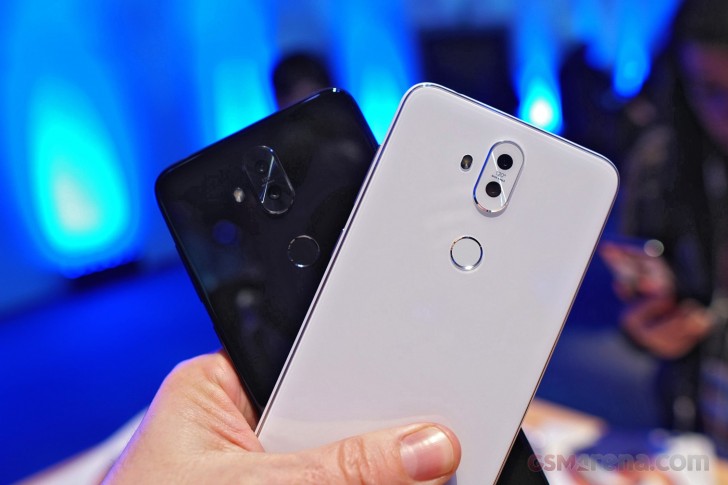
But once you overcome the ton of information you had to sort through the above specs sheets - then comes the best part - see these Zenfones for real. And they look good and comes with more than promising features and pricing.
Trivia done, time to do some Zenfone inspections. Shall we?
Zenfone 5 and Zenfone 5z hands-on
The Zenfone 5 duo was the star of the Asus event in Barcelona and there is an obvious reason for that. The flagship pair uses a 6.2" borderless LCD screen with an iPhone X-like notch. Fitting all sensors at the top allowed Asus to trim, if not get rid of, the bezels and the Zenfone 5 phones would post an excellent mark in the bezel-less race.
But the screen is not the only flagship feature, there is a whole lot of those.

The design is where the Zenfone 5 and 5z easily excel with a shiny glass-sandwich shell made of two curved Gorilla Glasses and an aluminum frame. Midnight Blue and Meteor Silver are the two available colors and they look stunning, no two words about it.
But as every glass design that lacks oleophobic coating, the beauty comes at a price - smudges and fingerprints all over the place. Still, anyone with a thing for glass phones should have made peace with that a long time ago.

Asus likes to point out their notch is smaller than Apple's. That's probably because they didn't need to fit a nearly impossible to miniaturize Kinect sensor beneath, but yes - Asus wins. Yay!

Asus chose an 18.5:9 screen aspect for its 6.2" unit but it's not that impressively-specked. For starters, it's an LCD unit but we can confirm it's really bright, contrasty, and with very nice viewing angles. The resolution of 1080p (1080 x 2246 pixels) makes up for 402ppi density, which check the box for a flagship-grade sharpness.
Flipping the Zenfone 5 or 5z isn't helping to shake the iPhone X reminiscence. On the contrary - it looks like an iPhone X even more with that horizontal dual-camera setup that's even humping like the X's. Yes, we are all for competition, options and choices, but sometimes too much is too much.

Anyway, there is a somewhat invisible texture over the rear glass which makes it grippier than the front. That and the sandblasted-like frame add for a rather secure grip and pleasant feel while handling those Zenfones.




The back of the Zenfone 5
The dual-camera at the back has a 12MP main Sony IMX363 with bright f/1.8 lens and dual-pixel PDAF. It supports EIS and 4K video recording at 30 fps. The Zenfone 5z with the Snapdragon 845 chip should be capable of 4K at 60fps capturing once it comes out in June.

There is also a secondary 8MP 120-degree wide-angle camera, just like on the LG G5.
The setup surely looks promising, but we couldn't test it at the event.

Other notable features found around the Zenfone 5 sides include a stereo speaker setup (earpiece + bottom speaker), and USB Type-C port. The 5 and 5z will also allow dual-SIM 4G slot in selected markets, where you can swap the second SIM for a microSD card.
The phone runs on Android Oreo with Zen UI. The notification icons were placed in the two horns, as expected. Tapping anywhere inside a horn will pop up all available notification icons as those can't be fitted all up there at the same time.
Also, swiping down from the right horn brings the regular notification drawer with one row of toggles, while a swipe from the left horn will bring the expanded view of that drawer.

Both flagships are filled to the brims with AI: AI Boost (for more power when gaming), AI Photography (with scene detection, photo learning, portrait mode and beautification), AI Display (stays on while you're looking at it and has automatic color temperature adjustment), and even AI Ringtone (which automatically adjusts the volume according to how noisy your surroundings are). Asus is also introducing something called ZeniMoji, of course, - live-animated avatars which you can even use in video calls or live streams. And Face Unlock is available, in case you thought otherwise.



Asus Zenfone 5
The Zenfone 5 duo features a 3,300 mAh battery with AI charging that should double its lifespan.
The Asus Zenfone 5 and 5z are completely identical outside, including the screen. The only thing different is the motherboard inside - the 5's will pack Snapdragon 636 chip with less memory, while the 5z will have Snapdragon 845 soldered with more RAM and storage.




Asus Zenfone 5
The less-expensive Zenfone 5 launches in April, while the €480 Zenfone 5z comes in June.
Asus Zenfone 5 Lite hands-on
The Zenfone 5 Lite might have been the less impressive sibling of the Zenfone 5 series, but originality is what it makes it as interesting.

The Lite model comes with a 6" screen with 18:9 aspect and 1080p resolution. The screen-to-body ratio is 80.3% which is an excellent score for a Lite model. Our first impression with the screen is equally impressive as the flagship model - high brightness, sharp, great contrast, and wide viewing angles.
While Asus likes to call it bezel-less, it's not, obviously. But for a cheap smartphone Asus has trimmed the side bezels almost out of existence, while the slim top and bottom bars won't disturb anyone.

And speaking of the top bar, Asus has put two selfie cameras and a LED flash in there - a 20MP main selfie shooter with Sony IMX376 sensor, and a secondary 8MP wide-angle cam with 120-degree FOV.
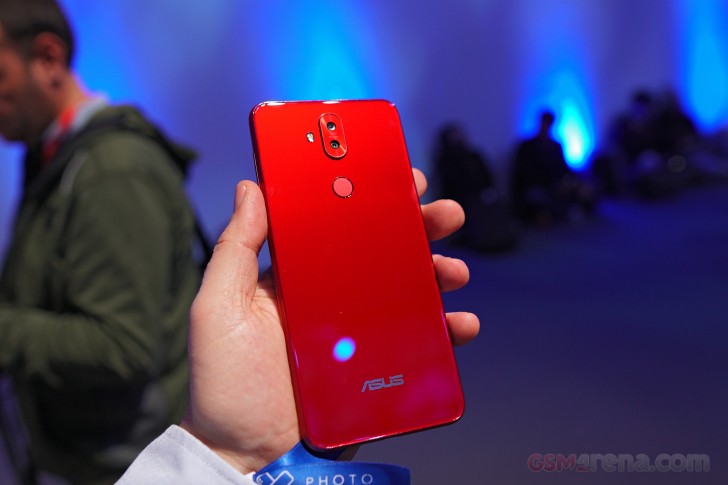
The Zenfone 5 Lite is also a glass-sandwich phone with an aluminum frame. The 2.5D-shaped front and rear glass pieces are pretty much the same, sans the different caveats. There is another dual-camera on the back - centered above the fingerprint scanner. Its main sensor is a 16MP one behind f/2.2 lens, while the wide-angle one is the same as the one at the front. There is another single LED flash here.

There are no visible antenna lines at the back of the Zenfone 5 Lite. There is no need of such as the back is all glass, but we are glad Asus didn't paint them over as some other makers do.




Asus Zenfone 5 Lite
The metal frame between the two glass panels has chamfers for comfort and with its matte finish it's the only thing to gives a secure grip of the Zenfone 5 Lite. It's enough though and we can't complain - the Lite is as slippery as any other glass phone - no more, no less.




Asus Zenfone 5 Lite
The Lite will be available with different chipsets on different markets - you will get either Snapdragon 430 or 630. The latter has better graphics, 4K video recording, and we expect it will cost more than the 430 model. It will launch running on Oreo this March in Midnight Black, Moonlight White, Rouge Red.
Asus Zenfone Max (M1) hands-on
The Zenfone Max (M1) is a smaller sibling to the Max Plus (M1) from last year. It's a rather entry-level smartphone but jam-packed with features with a tall screen, a dual-camera, and a large battery being its highlights.

The phone's body is made entirely of plastic, while the screen glass is curved with the usual 2.5D effect. Remember how we said we applaud Asus for not painting antenna lines on the Zenfone 5 Lite? Well, it did that on the Max (M1), even though the phone is fully plastic despite what the metallic-finish PR statement is trying to say. We can't say if those are the real deal or not, but Asus went to great lengths to mimic a metallic feel and those trendy-shaped antenna strips help build that impression.

But the we'd be lying if we said the phone feels metallic. The whole Zenfone Max (M1) looks and feels plastic and there are no two ways about that. Which doesn't make the Zenfone 5 Lite bad at all, it's an entry level phone and it's quite good looking at that.
The 5.5" screen at the front is 18:9 in aspect ratio but comes with 720p resolution. The colors are duller than the rest of the Zenfones we saw today, the contrast is lower and the screen is dimmer overall. But once again - it's an entry-level and we are yet to test the final unit, so those are only first hands-on impressions.





Asus Zenfone Max (M1)
We are not big fans of the model fragmentation Asus does to everything, but the Max is not spared. Some markets will get it with Snapdragon 430 and a 13MP selfie cam, others will get the Snapdragon 425-power version with 8MP selfie cam. Go figure!
The dual-camera setup at the back stays the same across all models. It's a 13MP main cam with f/2.0 lens and an 8MP wide-angle sensor for panoramic pictures. LED flash is available, PDAF and EIS for the 1080p videos.
The Zenfone Max (M1) seems like a very thoughtful device, fits well in hand and has a promising battery autonomy with that 4,000 mAh cell inside. It's already available for purchase for $229 in the USA and we expect about €220 for Europe. Deepsea Black, Sunlight Gold, Ruby Red are the colors you get to choose from.
Conclusion
Tempting pricing is what probably raises the potential for success of the new Asus Zenfones. The Zenfone 5 and 5z impress with notched full-screens and well-specked main camera, while the Lite model has not three but four cameras and a trendy screen. The Max (M1) brings long-lasting Oreo experience and dual-camera on the cheap.
It seems Asus is pretty well set for this year, we can only wait and meet those devices personally in our office.
0 Response to "Asus Zenfone 5, 5z, 5 Lite hands-on review"
Post a Comment