Smart Android And Trik-Commenting on Andorid indeed never endless, because smart devices this one is often updated every certain amount of time. So that the market can always be garapnya menerinya with pleasure. And it is not denied if this device has become the lifestyle of each society. To not wonder if the 6th business information and many are turning to mobail smartphone. With Android which thoroughly dominated the mobile industry, choosing the best Android smartphone is almost identical to choose the best smartphone, period. But while Android phones have few real opponents on other platforms, internal competition is intense.
Introduction and specs
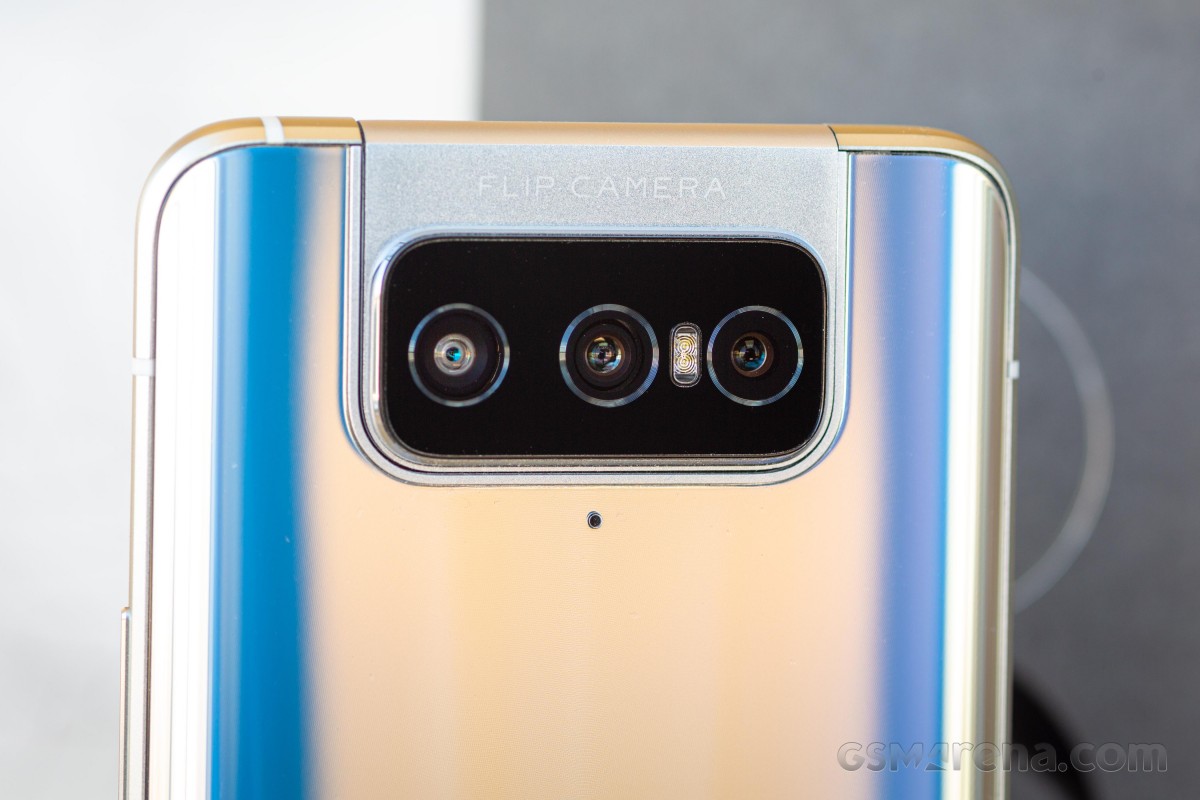
The Asus Zenfone 7 series had a Pro and non-Pro model, but now, the Zenfone 8 series takes a different approach with its two offerings named Zenfone 8 Flip and just Zenfone 8. The former retains the iconic flip camera mechanism, while the smaller model aims to fill in the gap of a full-fledged mini Android flagship.
Interestingly, Asus has stressed that the Flip isn't the direct successor to the Zenfone 7 Pro - the vanilla 8 is. This also explains why the 8 got the more meaningful upgrades while the 8 Flip seems like a side-grade.
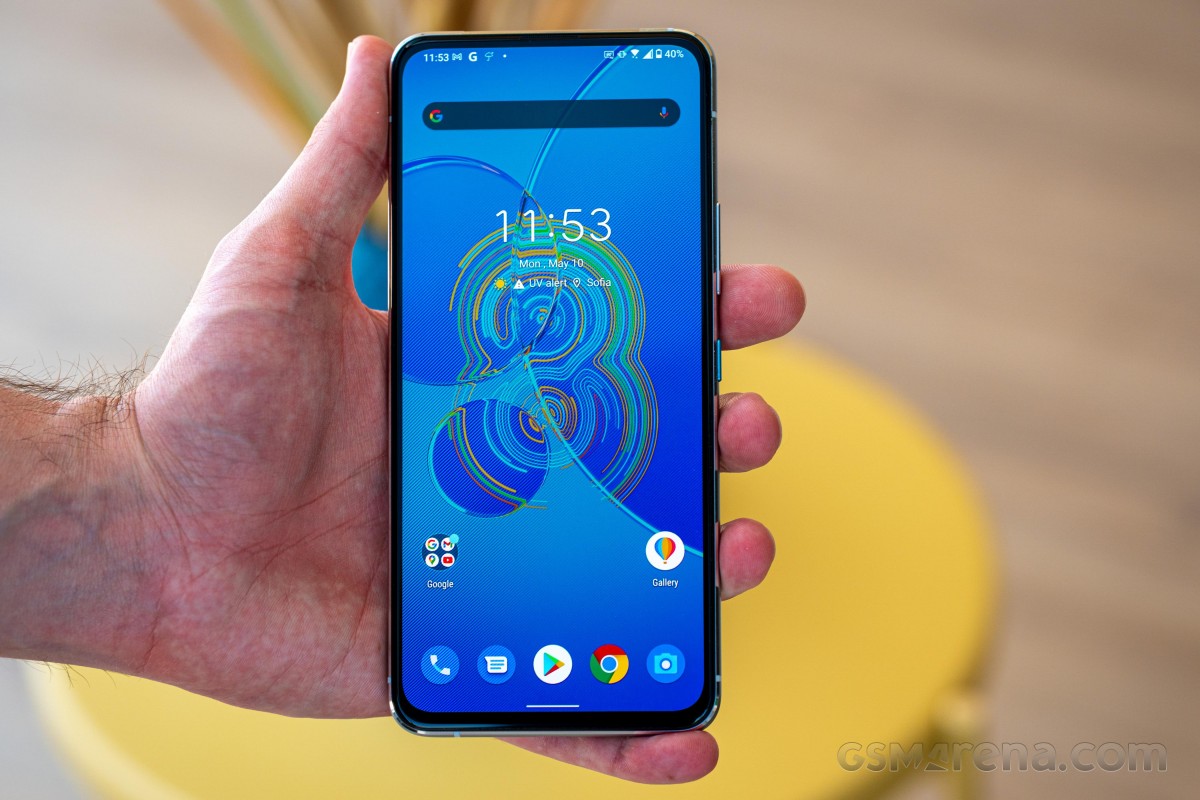
Regardless of their smartphone positioning, in the grand scheme of things, Asus seems to be filling a certain vacant spot in the market. The spot of an enthusiast's brand that challenges the status quo and offers flagship killer devices like OnePlus used to do.
Asus Zenfone 8 Flip specs at a glance:
- Body: 165.0x77.3x9.6mm, 230g; Glass front (Gorilla Glass 6), glass back (Gorilla Glass 3), aluminum frame.
- Display: 6.67" Super AMOLED, 90Hz, HDR10+, 1000 nits (peak), 1080x2400px resolution, 20:9 aspect ratio, 395ppi; Always-on display.
- Chipset: Qualcomm SM8350 Snapdragon 888 5G (5 nm): Octa-core (1x2.84 GHz Kryo 680 & 3x2.42 GHz Kryo 680 & 4x1.80 GHz Kryo 680); Adreno 660.
- Memory: 256GB 8GB RAM; UFS 3.1; microSDXC (dedicated slot).
- OS/Software: Android 11, ZenUI 8.
- Rear camera: Wide (main): 64 MP, f/1.8, 26mm, 1/1.73", 0.8µm, PDAF; Ultra wide angle: 12 MP, f/2.2, 112˚, 14mm, 1/2.55", 1.4µm, dual pixel PDAF; Telephoto: 8 MP, f/2.4, 80mm, PDAF, 3x optical zoom.
- Front camera: Motorized flip-up main camera module.
- Video capture: Rear camera: 8K@30fps, 4K@30/60/120fps, 1080p@30/60/240fps, 720p@480fps; gyro-EIS, HDR; Front camera: 8K@30fps, 4K@30/60/120fps, 1080p@30/60/240fps, 720p@480fps; gyro-EIS, HDR.
- Battery: 5000mAh; Fast charging 30W, USB Power Delivery 3.0.
- Misc: Fingerprint reader (under display, optical); NFC; 3 microphones;
We are not saying that other brands like Xiaomi lack any affordable flagship propositions. However, the Zenfone 8 Flip and the 8 vanilla each offers something the others don't. The former aims to be the selfie king and gets bonus points for its camera setup on the back, which is versatile in more than one way. The 8 is, well, a proper compact flagship, a rare breed these days.
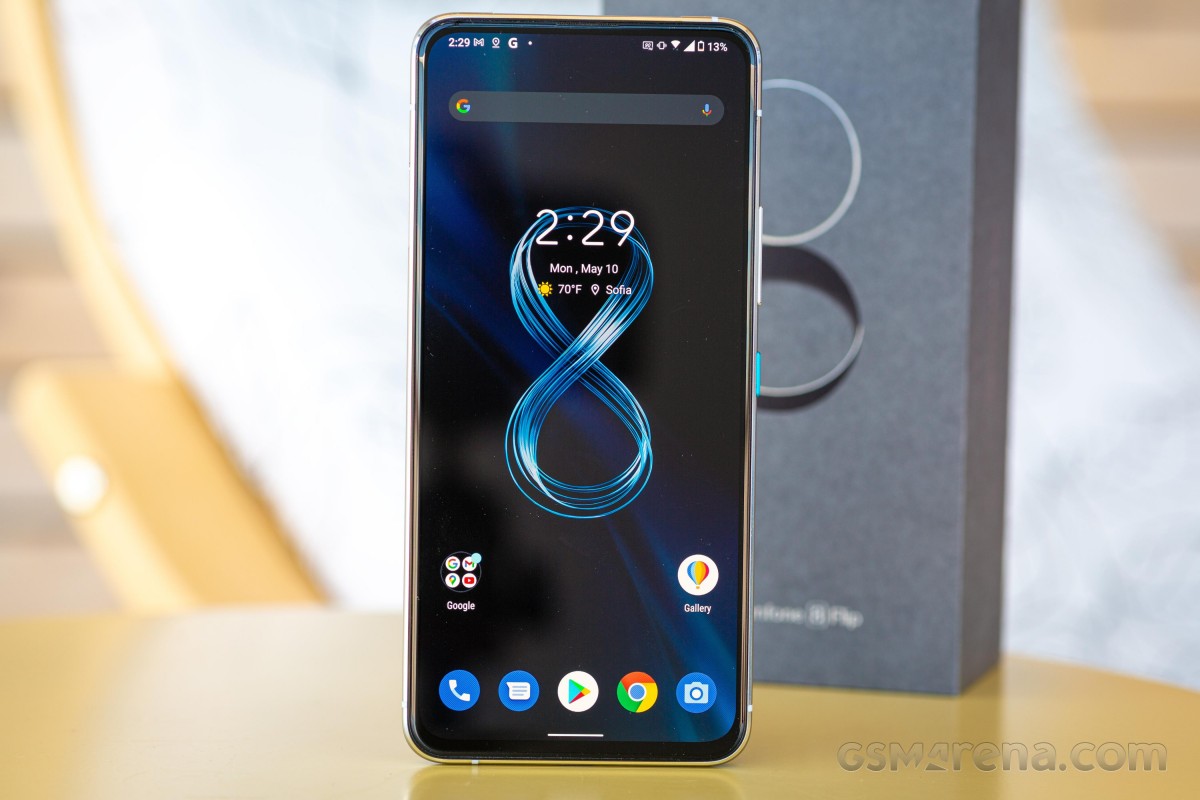
We will focus on the Flip in this review. It impresses not only with the price but also seems to be cutting way fewer corners than its predecessors. It's the most mature flip camera Zenfone yet, so to speak. A quick skim through the specs sheet suggests an almost full-fledged flagship experience with clean Android UI without breaking the bank. Does that sound familiar? It's what OnePlus used to stand for.
The clean Android experience doesn't have to be bland, though. Asus has baked in more than a handful of custom software features that elevate the user experience.
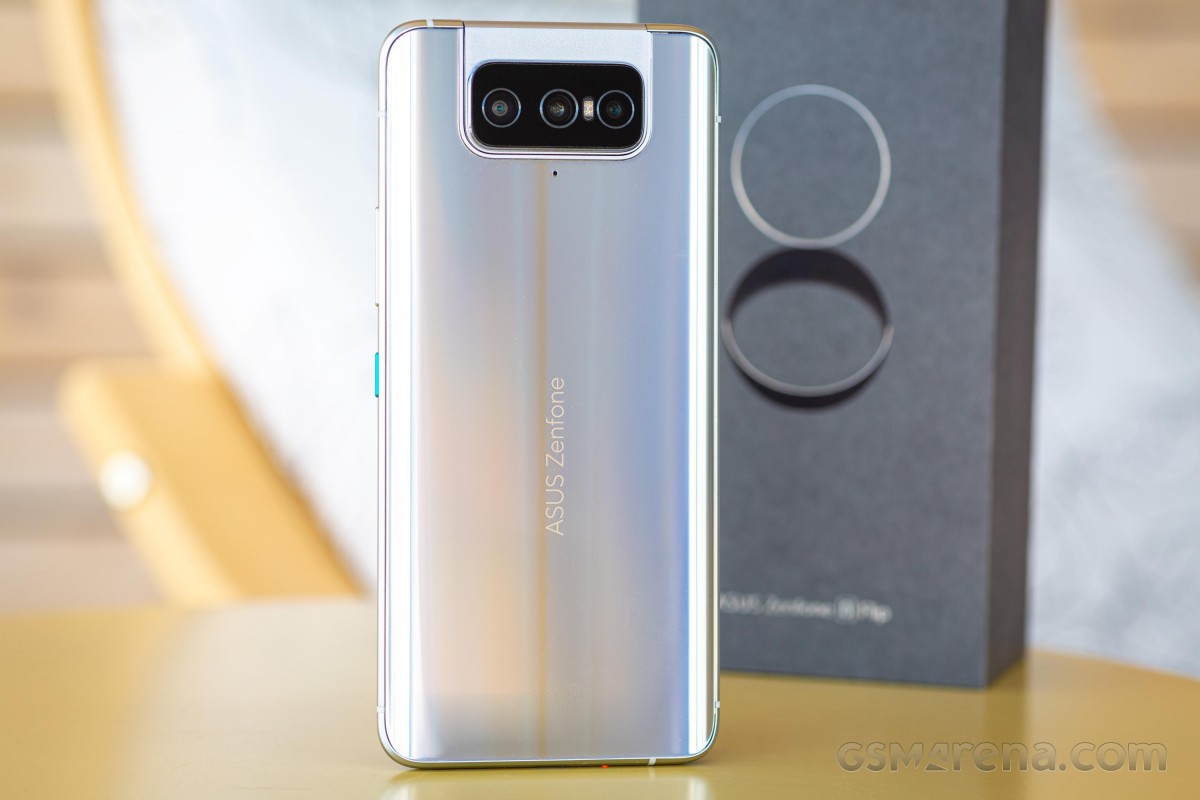
On the other hand, the Zenfone 8 Flip has fewer upgrades to boast about. The same 90Hz OLED panel is on board along with the unchanged camera setup, and there is no 3.5mm jack despite the fact there is one on the more compact vanilla Zenfone 8. We would have expected more upgrades in this year's generational upgrade. But perhaps there's more than meets the eye, so let's get on with our review and unravel what the Zenfone 8 Flip is all about.
Unboxing the Asus Zenfone 8 Flip
The handset comes inside a stylish, gray-colored box with some goodies inside. It starts with the 30W fast charging brick and a corresponding USB-C to USB-C cable.
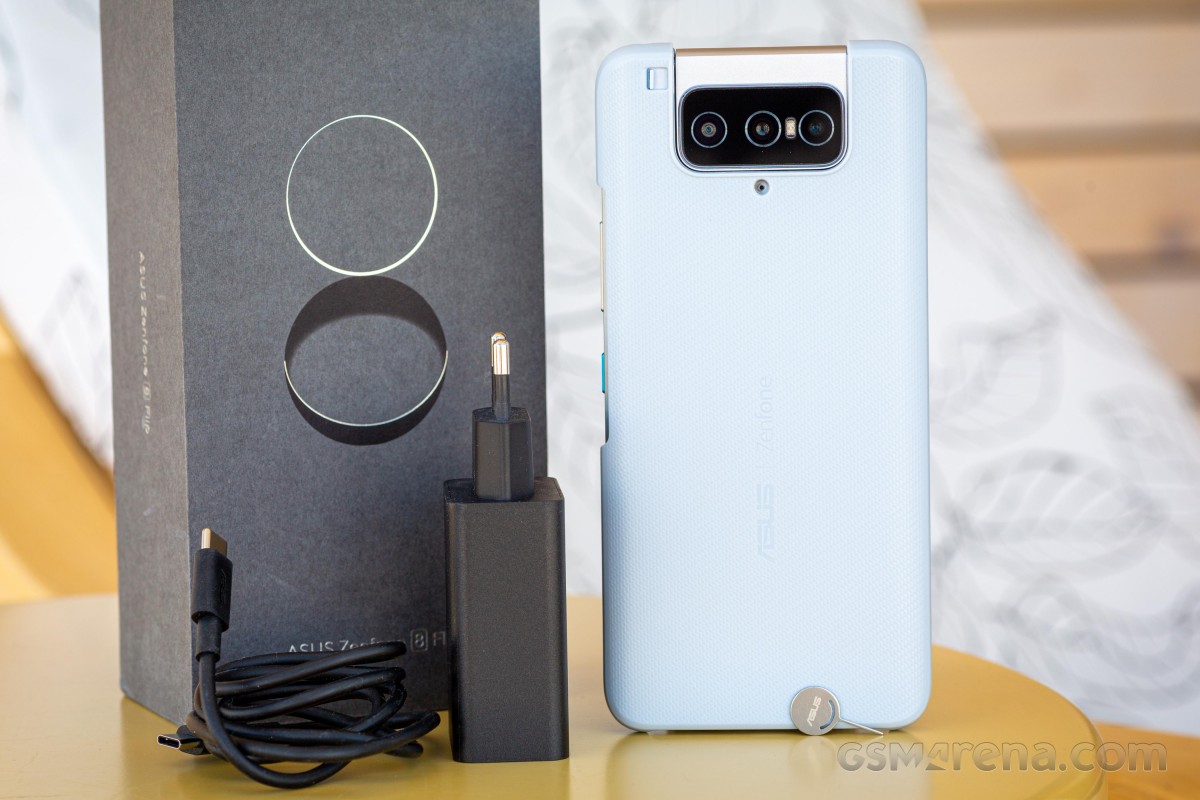
Asus has also included a custom protective case. Our experience with it is mixed because it's made of hard plastic and makes the phone even bulkier, and it's arguably less grippy than the phone itself.
Then again, we appreciate the patterned design, which is way better than the cheap transparent cases that usually come with phones. Also, the fact that you get a case out of the box is a nice bonus given the unusual, niche design of the Flip. We suspect aftermarket cases will be scarce, especially at launch.
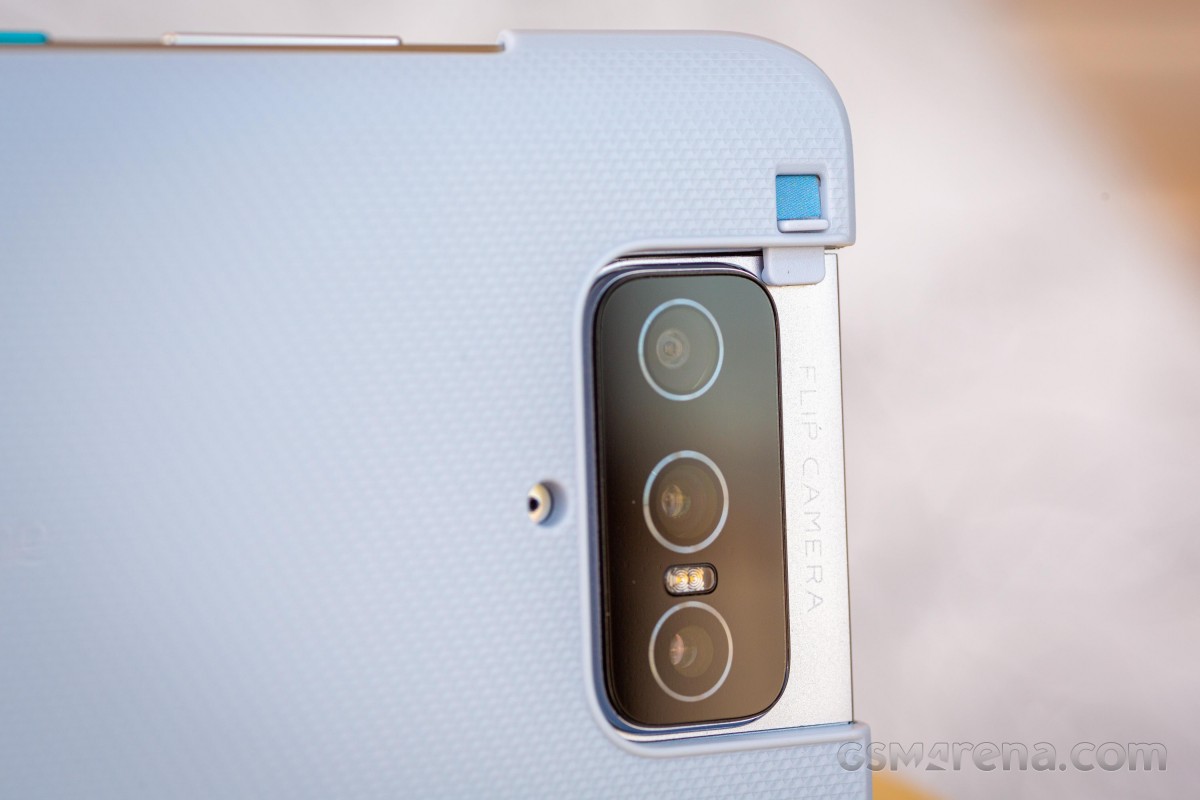
Speaking of the case, it has a small switch next to the camera module that locks the flip module in place. Asus says it's particularly useful when the phone is put on a bike, for example. The system would know it's locked, and the Flip would stay in place even if strong vibrations occur.
Design and ergonomics
Not much has changed in terms of design since the last generation of Zenfones. It's still rather heavy and unwieldy, even. The usual glass sandwich construction is at hand, with the back panel being quite slippery with big curves to the side. The frame is aluminum-made with an anodized finish that stands out from the rest of the body. The front uses a Gorilla Glass 6 sheet for protection, but the back settles for Gorilla Glass 3.
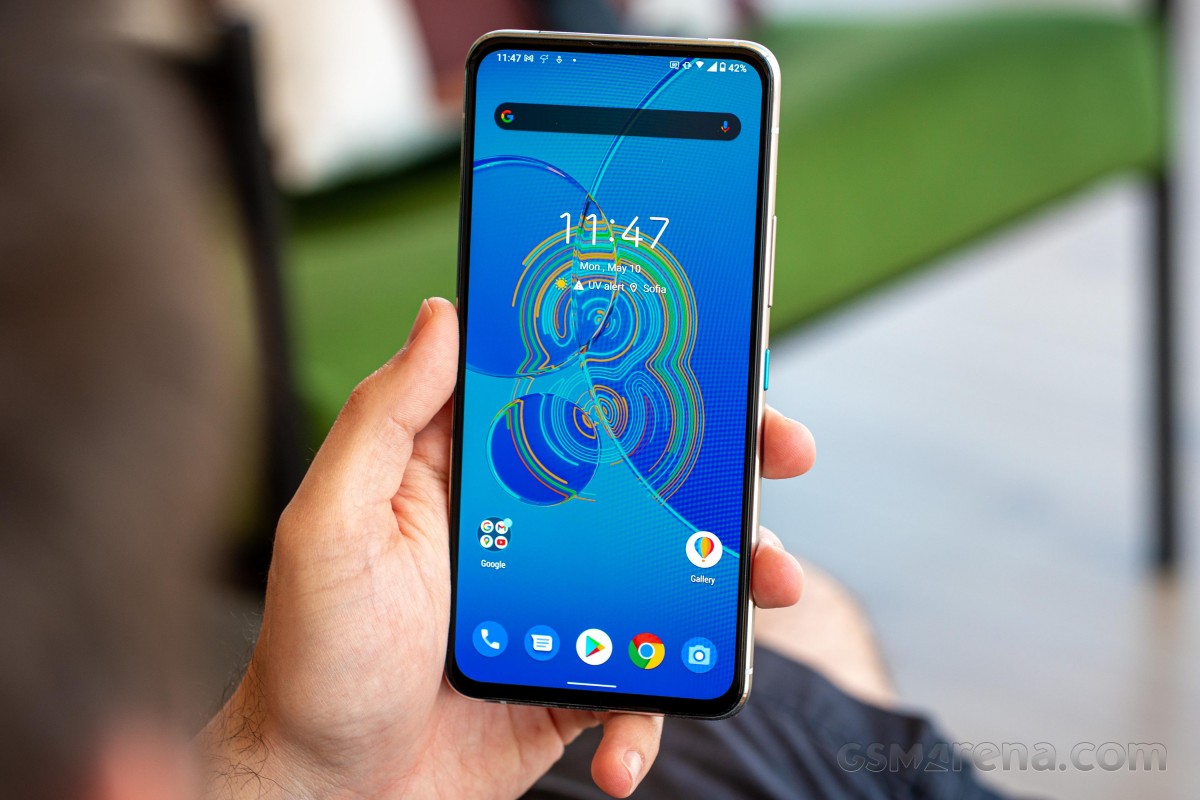
Interestingly enough, since there was no room for the noise-canceling microphone at the top side of the frame (the camera mechanism takes up most of the space), Asus placed it below the camera bump. Speaking of the camera bump, it has very sharp edges but doesn't stick out more than your average camera module.
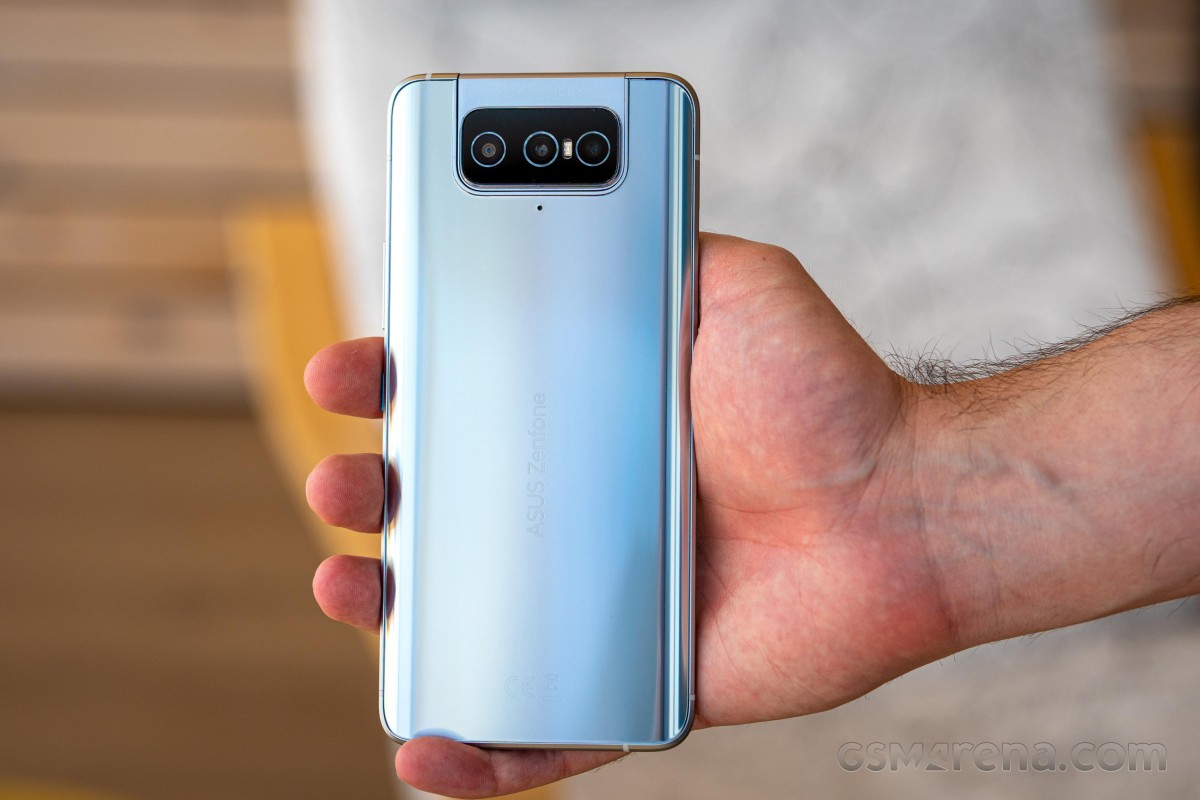
As far as the "Flip" part of the phone is concerned, we hardly see any changes to it design-wise. The motor makes a satisfying sound when you open or close the camera module. There are some additional system sounds, but none of them sound as cool as the actual sound of the motor. And as before, you can adjust the flip angle manually, and the software didn't warn us of potential issues, so this should be alright.
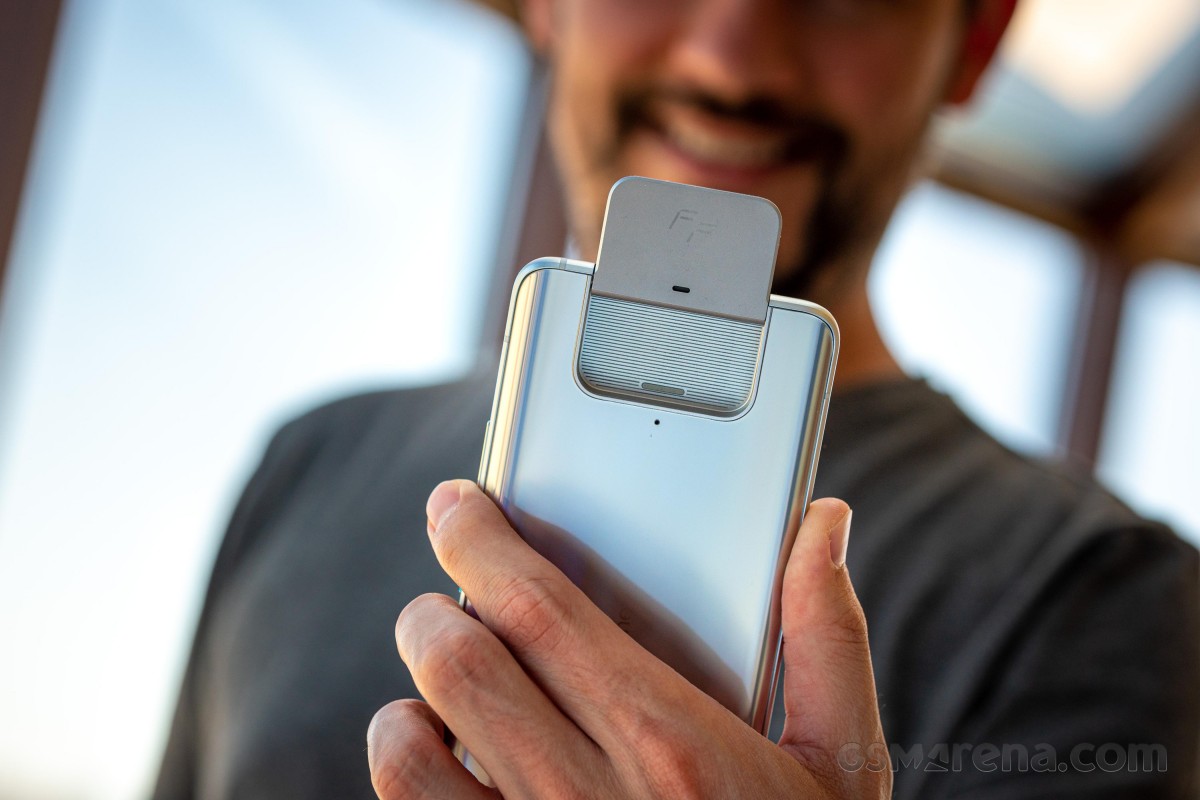
The piece itself is made of Liquid metal once again, a commercial name for an alloy, which is more durable and lighter than standard aluminum alloys. It ensures that the mechanism will work no matter what.
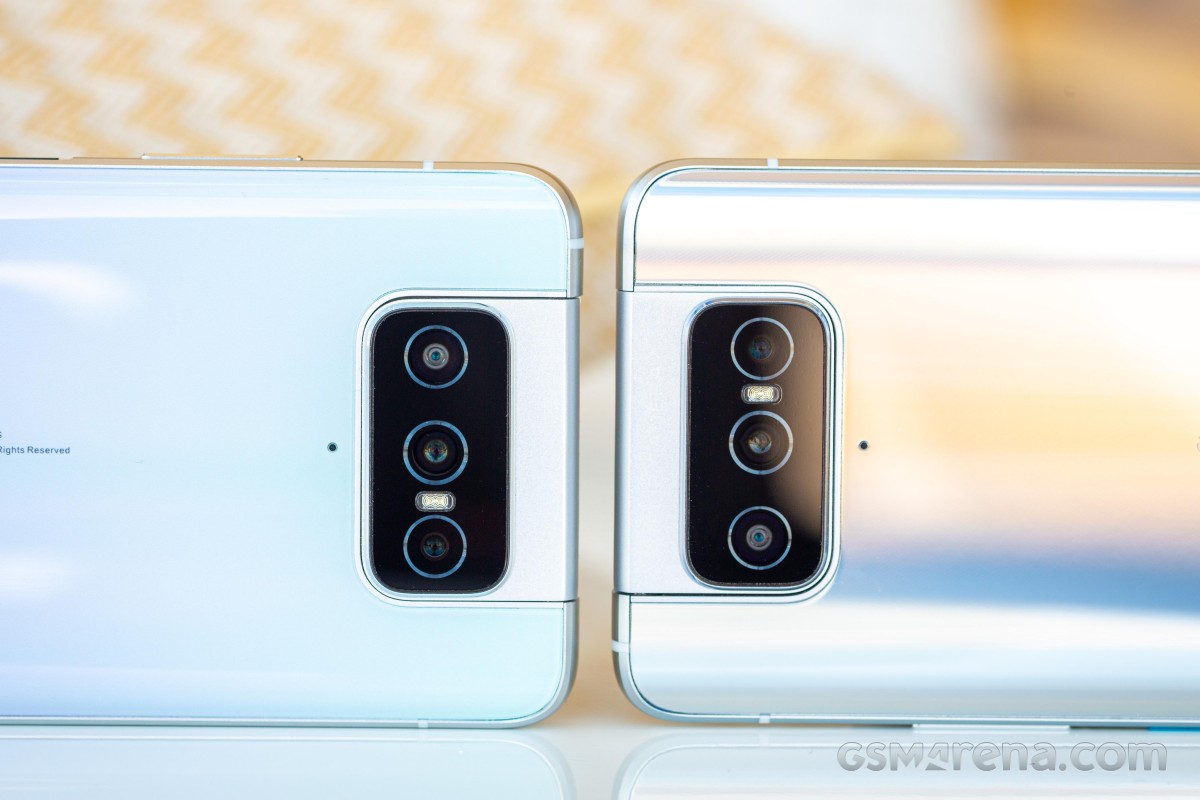 Asus Zenfone 7 Pro and 8 Flip
The under-the-hood change here is the motor module that detects the angle of the flip camera using an angle sensor. Compared to the previous version, this one provides 50% stronger output shaft, further improving the longevity of the motor. Asus has rated it to endure at least 300,000 flips (or about 5 years of normal usage with 150 flips per day). A 0.5-degree microstep solution has been introduced for smoother and more precise positioning of the module.
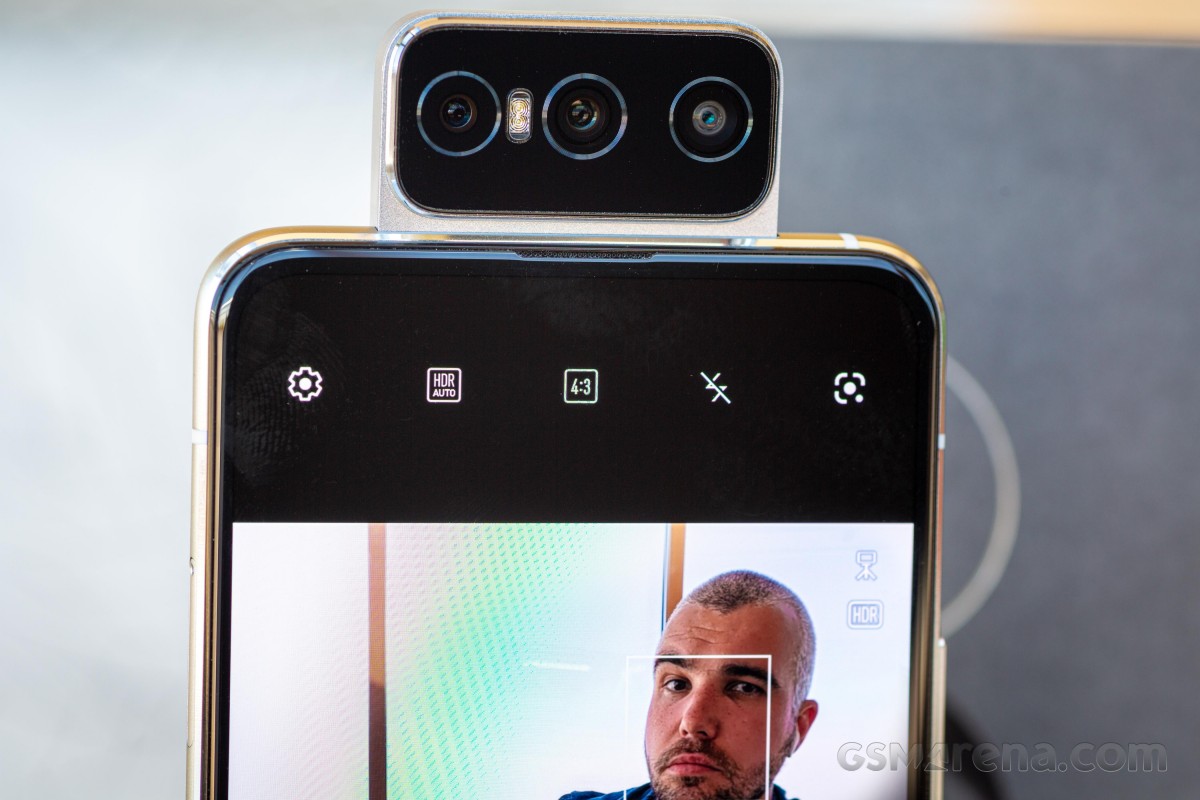
If a drop occurs, the phone will detect that using the built-in G-sensor and automatically retract it before it hits the ground.
In any other case, the angle sensor, which we mentioned earlier, makes sure the mechanism stays in place when positioned.
Perhaps the majority of people would love to hear that there are no fancy edges or curves on the front. It's just flat glass. In fact, the panel itself is sticking out a bit more than we would like, forming a ridge.
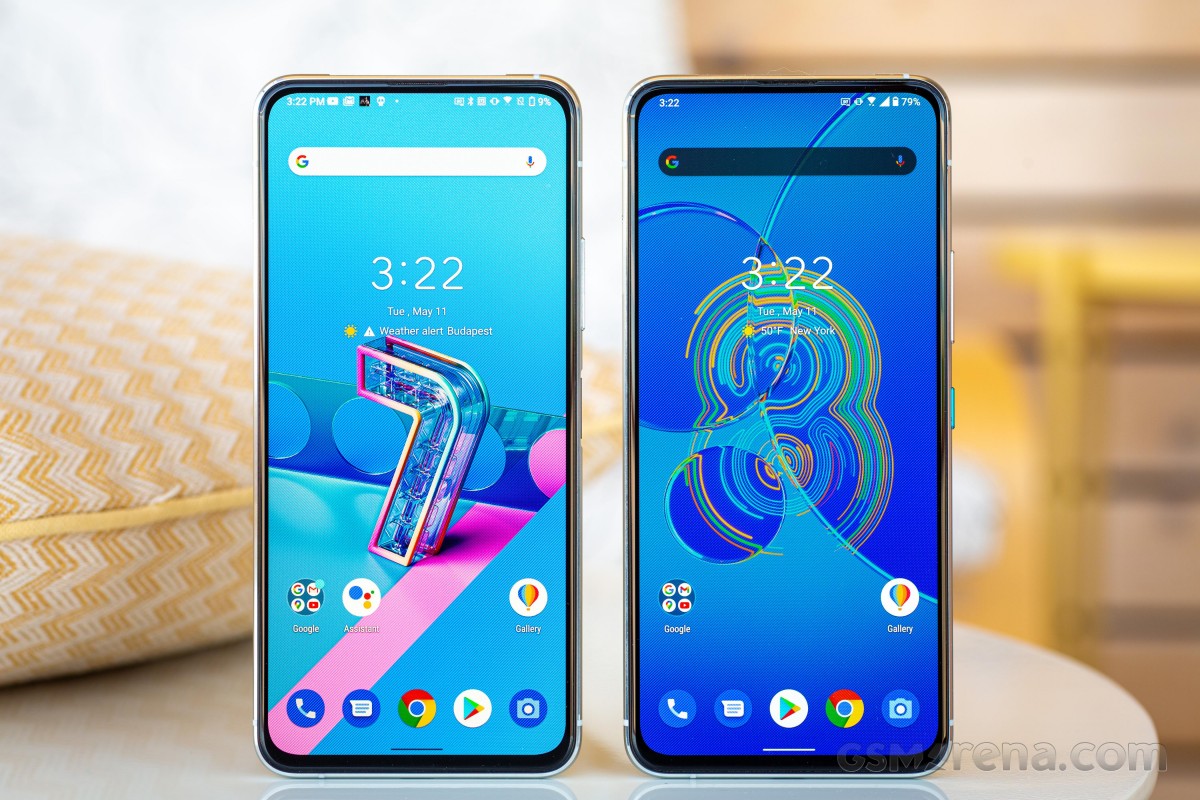 Asus Zenfone 7 Pro and 8 Flip
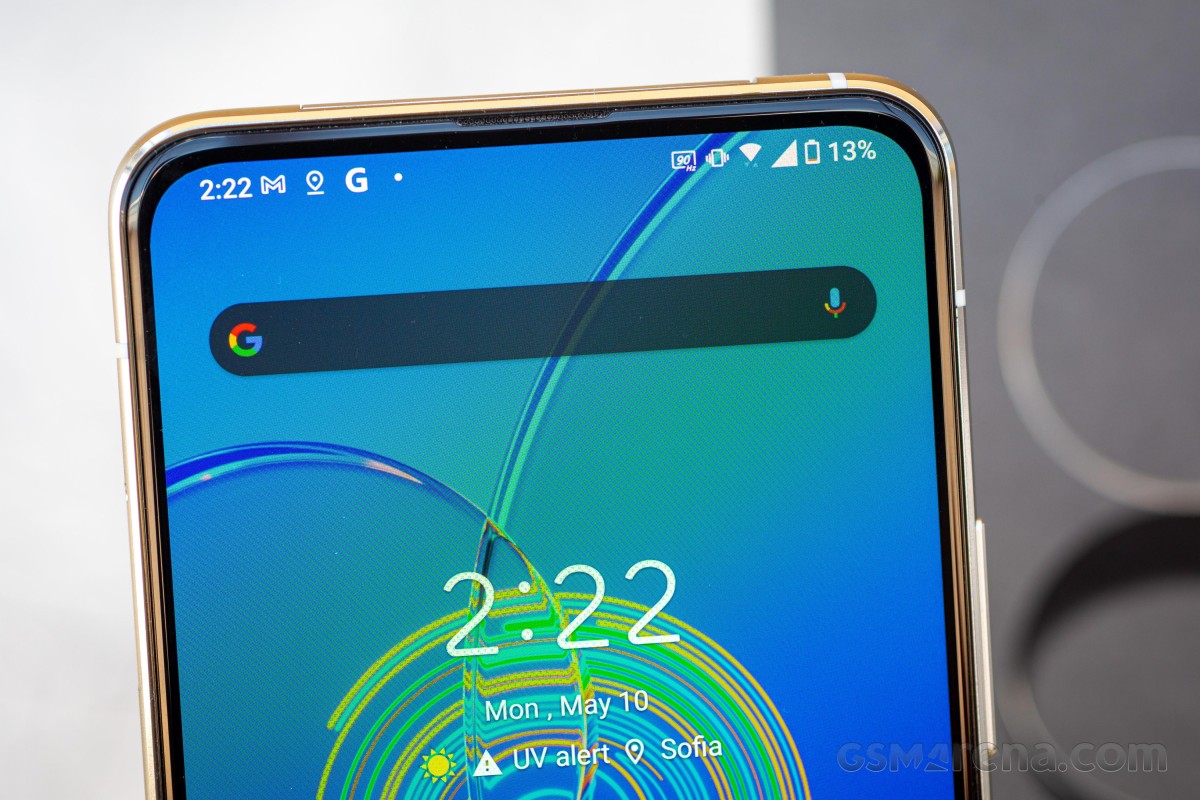
The bezels may not be exactly flagship-grade either, but the Zenfone 8 Flip gets bonus points for the lack of any cutouts.
You get a large, unobstructed OLED display on the front, with the bottom bezel being the thickest, followed by the top one. The top has room only for the tiny earpiece while the proximity and ambient sensors are placed under the display.
As opposed to most modern smartphones, the Zenfone 8 Flip keeps the notification LED. Asus has found a pretty cool place for the LED since there's no room for it on the front. It's placed at the bottom side of the frame, right next to the USB-C port. The speaker grille and the main microphone are there, too.
On the left, we have the SIM card tray only, which can house two SIM cards and a microSD card simultaneously. On the right, we have the volume rocker and the accented power button, both of which have nice, clicky feedback. They are also conveniently positioned within thumb's reach, and the same goes for the fingerprint scanner.
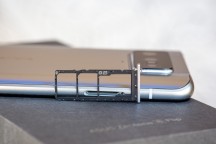
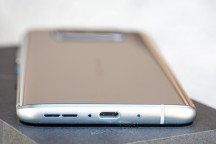
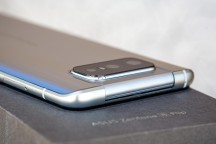
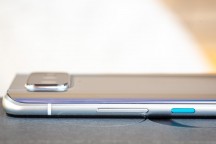
Zenfone 8 Flip from the side
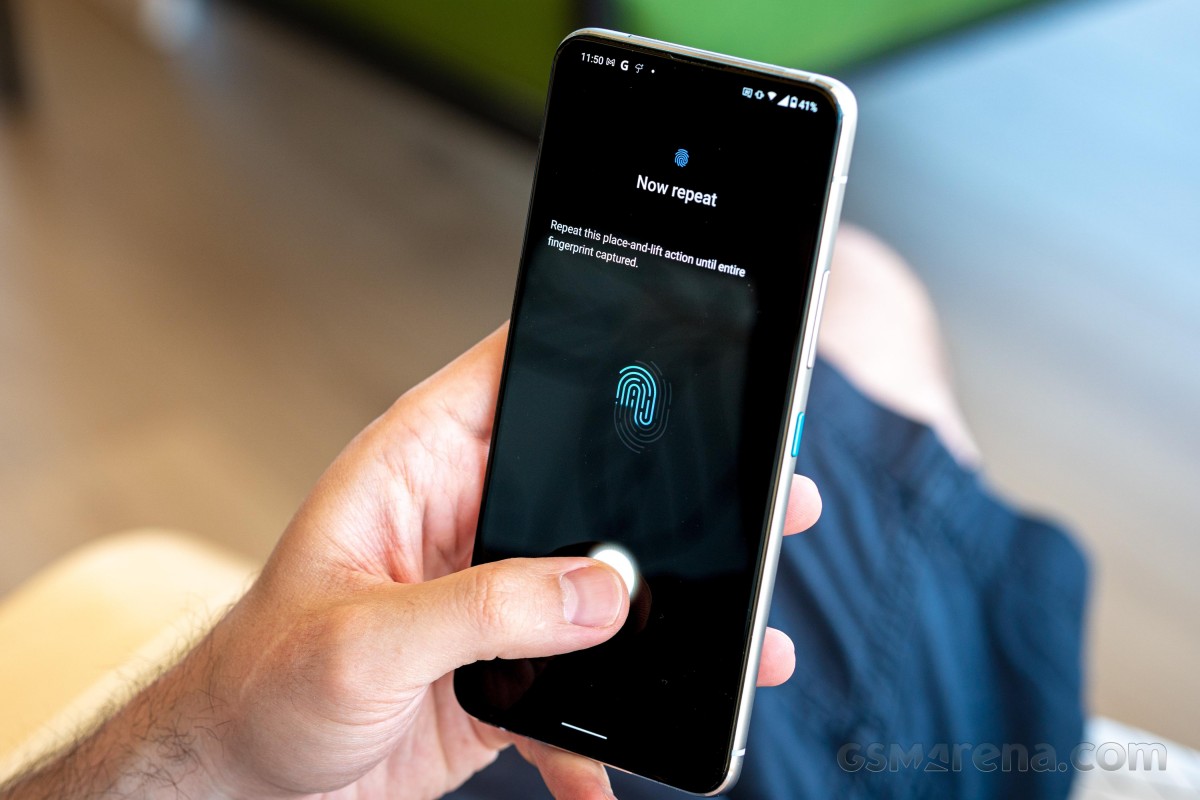
While last year's device had the fingerprint reader integrated into the power button, this year's Zenfone 8 Flip puts it behind the screen where it belongs. And we are happy to report that we had zero troubles using it. Its placement is optimal for the size of the handset.
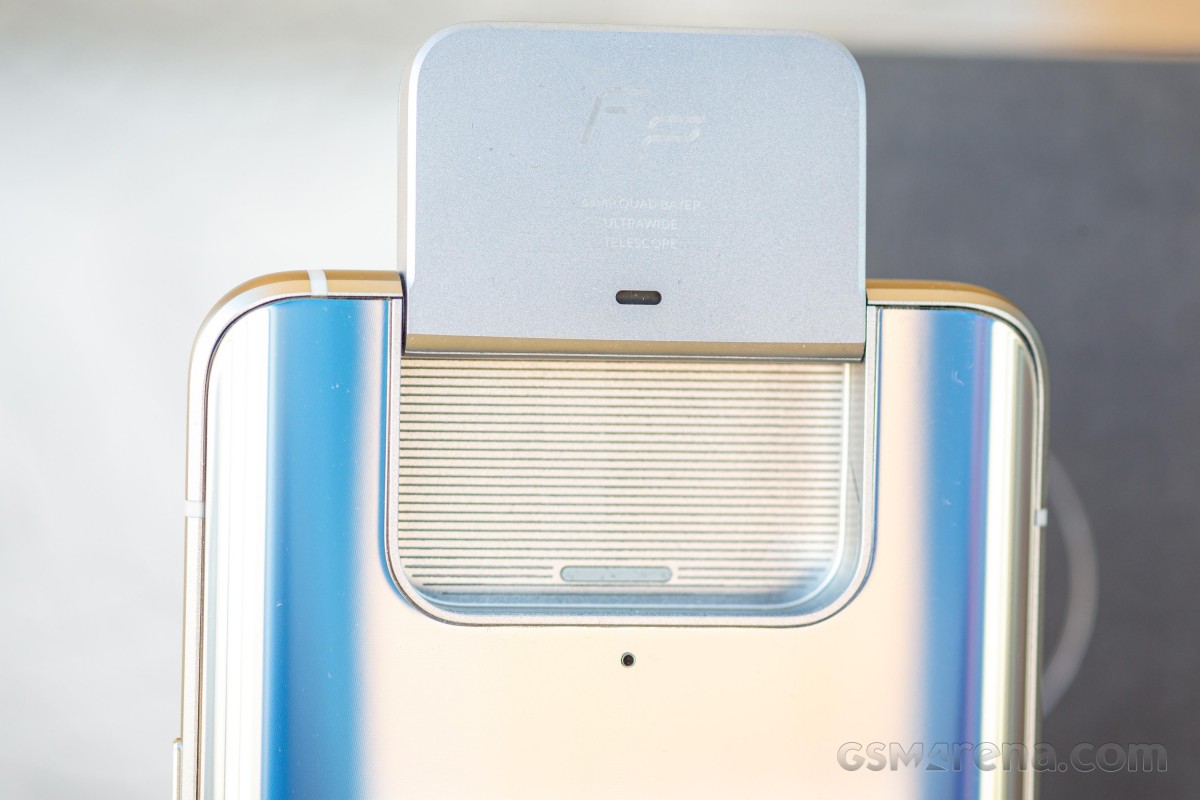
The Zenfone 8 Flip feels solid in hand, and only premium materials have been used in its making. you get a large, uninterrupted display, an under-display reader, and even a notification LED, which is a rare sight these days.
Not everything about its handling is ideal, though. The device is slippery, thick, heavy and the back glass (in this color at least) is a huge fingerprint magnet. Moreover, the camera mechanism adds to the overall weight and tips the phone forward, meaning it's top-heavy and easy to slip out of your hand.
Big, HRR OLED panel
Asus seems to be proud of its Samsung-made OLED and for a reason. On paper, the screen isn't quite up there with the top flagships, but it does cover the bare minimum when it comes to faster refresh rates. The Flip inherits the same 6.67-inch OLED panel with 1080 x 2400px resolution (20:9 aspect ratio) from the Zenfone 7 Pro, although Asus made it clear that the Flip isn't a direct successor to the Pro model from last year.
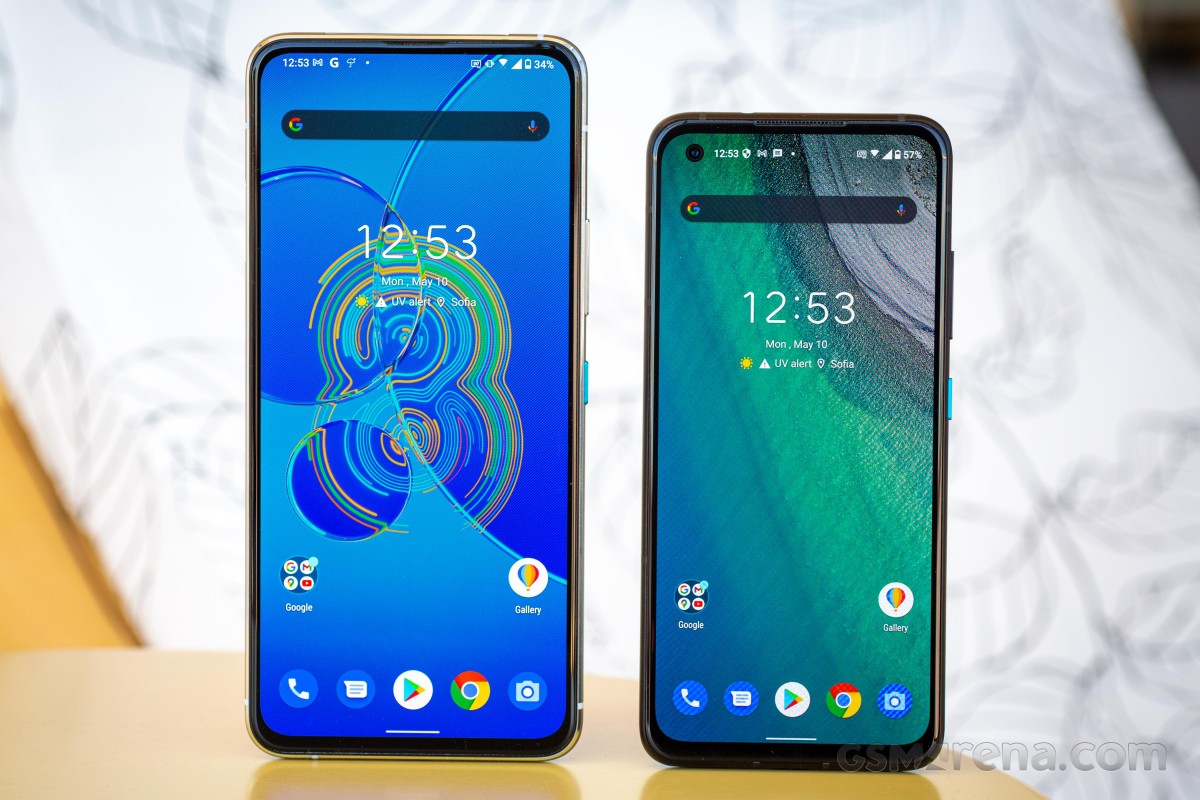 Asus Zenfone 8 and 8 Flip
But there's more to it than just hertz, right? The company advertises 110% DCI-P3 color gamut coverage, dE2000 less than 1, 700 nits maximum brightness and up to 1000 nits spot brightness. As a bonus gaming feature, the panel supports up to 200Hz touch sampling rate.
| Display test | 100% brightness | ||
| Black, |
White, |
||
| 0 | 518 | ∞ | |
| 0 | 735 | ∞ | |
| 0 | 440 | ∞ | |
| 0 | 529 | ∞ | |
| 0 | 741 | ∞ | |
| 0 | 525 | ∞ | |
| 0.038 | 871 | 22921:1 | |
| 0 | 459 | ∞ | |
| 0 | 883 | ∞ | |
| 0 | 498 | ∞ | |
| 0 | 926 | ∞ | |
Our tests were able to confirm these claims for the most part. For instance, in manual mode, the display boosts up to 518 nits, which is pretty good to begin with, and at auto, the nits shoot up to 735. Unfortunately, we couldn't confirm the 1000 nits spot brightness with our equipment but the most accurate preset called Standard got close to the advertised dE2000 of 1. The result we got was 2.6, which is excellent anyway.
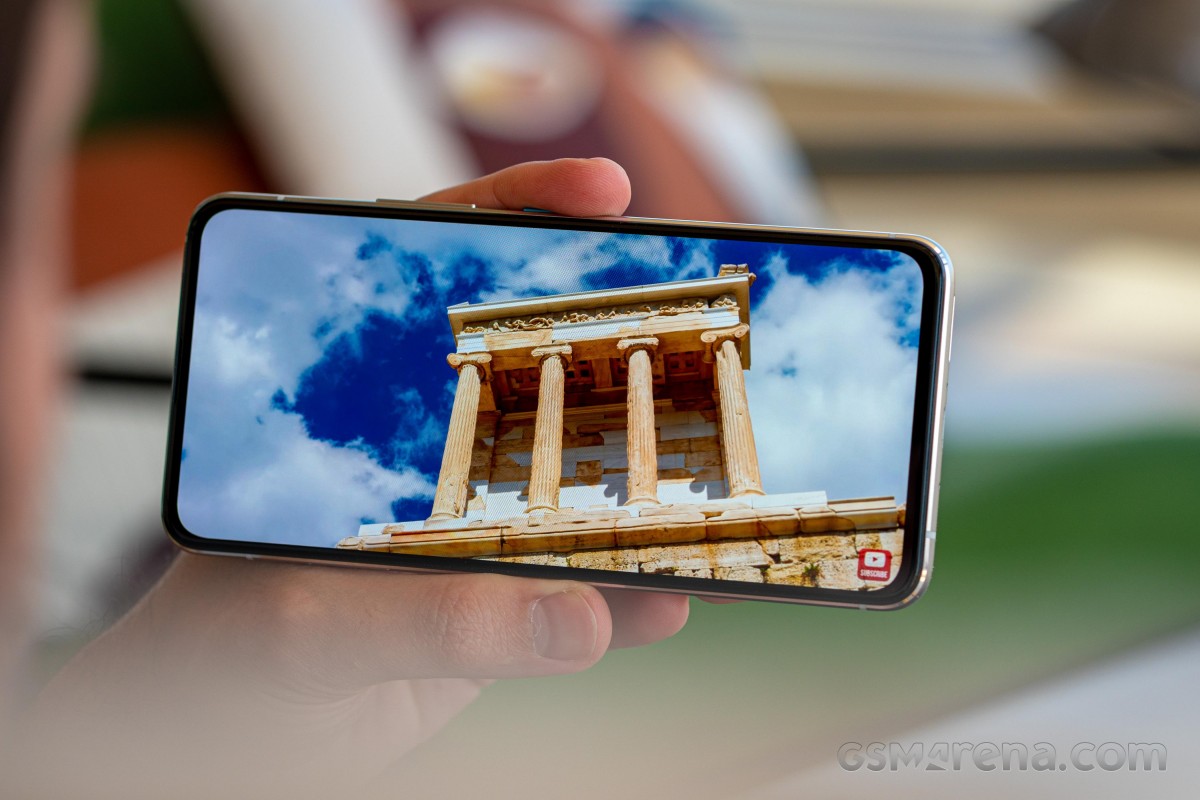
Refresh rate control, on the other hand, isn't up to the snuff. Which is rather odd considering the experience Asus has with its ROG Phones lineup. We found that the display locks at 90Hz in most cases even if you are not interacting with the display or when just sitting on the Home screen. The good news is that some sort of control is at hand. Opening the Netflix or YouTube app will instantly lower the refresh rate to 60hz, and the same goes for playing videos on the handset's native player. Which ironically is often the place where other OEMs miss to lower their refresh rate.
Battery life
We've got the same display and the same 5,000 mAh battery on board, the only difference is the chipset. However, the overall result isn't too far from the 7 Pro's from last year. In fact, the 8 Flip is a few minutes or hours shy of its predecessor in some tests.
You get marginally better video playback runtime but lose a few minutes in the web browsing test. 3G talk time has seen a significant increased but standby has gone down. In the end, we got a solid 98h overall endurance rating. However, compared to its rivals, that seems to be just below average for 5,000 mAh-powered smartphones.
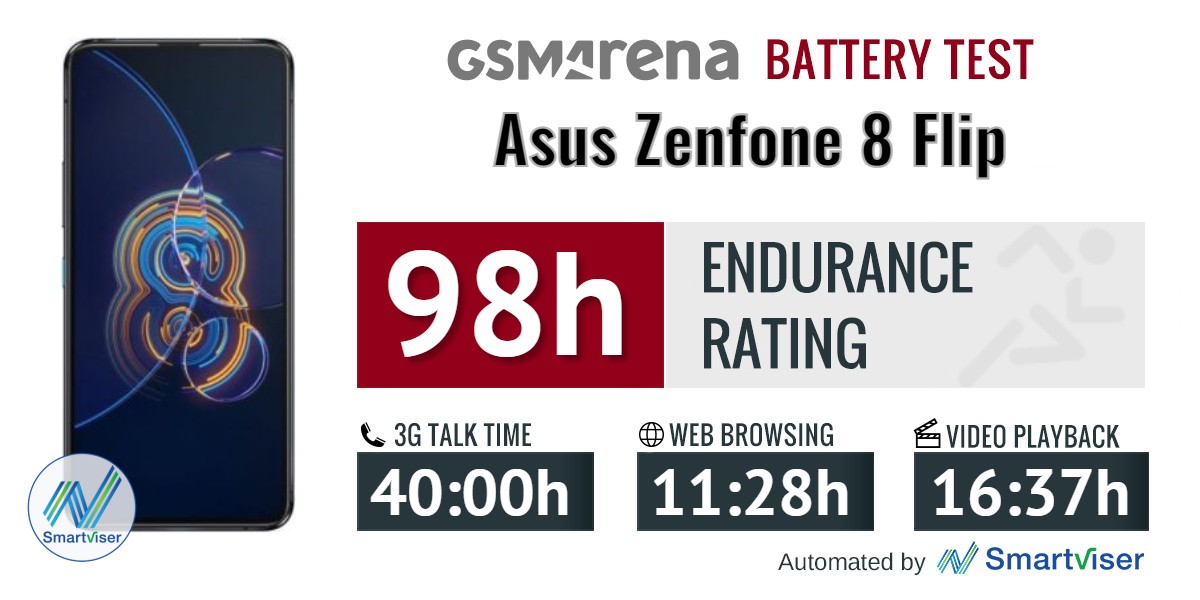
Our battery tests were automated thanks to SmartViser, using its viSerDevice app. The endurance rating denotes how long the battery charge will last you if you use the device for an hour of telephony, web browsing, and video playback daily. More details can be found here.
All test results shown are achieved under the highest screen refresh rate mode. You can adjust the endurance rating formula manually so it matches better your own usage in our all-time battery test results chart where you can also find all phones we've tested.
Charging speed
The Zenfone 8 Flip didn't do exceptionally well in the charging test as it drags behind the competition in the 30-minute and in the full charging test. It takes its power from a 30W-rated power adapter working on the USB Power Delivery protocol. It's even behind Samsung's Galaxy S21+ 5G that uses the same standard at 25W.
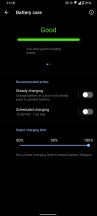
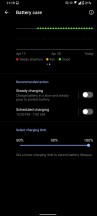
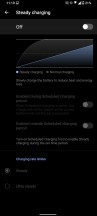
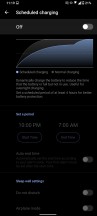
Battery care
On the bright side, the handset provides you quite a bit of control over its charging. You can even set scheduled charging or use the system to analyze your habits. It even gives you feedback on whether or not your charging habits are harmful to the battery. Limited charging is a unique option that's fairly popular on laptops. Maybe that's Asus laptop-making experience taking place here.
30min charging test (from 0%)
- OnePlus 9 Pro
99% - Xiaomi Mi 11
83% - Asus Zenfone 8
60% - Samsung Galaxy S21+ 5G
54% - Asus Zenfone 8 Flip
53%
Time to full charge (from 0%)
- OnePlus 9 Pro
0:32h - Xiaomi Mi 11
0:50h - Samsung Galaxy S21+ 5G
1:12h - Asus Zenfone 8
1:28h - Asus Zenfone 8 Flip
1:40h
Speakers
The Asus Zenfone 8 Flip seems to be using the same speakers from before, but this time around, there's a noticeable upgrade, and that's the Dirac sound technology previously found on ROG Phones. In short, Asus has partnered with a Swedish Hi-Fi company to solve the issues small speakers have. To minimize distortion and enrich the bass, Asus and Dirac made an algorithm that adjusts the frequency response curve in real-time.
A few specs about the hardware itself - 8 x 9mm top speaker, 12 x 17mm bottom speaker and both powered by a dual NXP TFA9874 smart amplifiers.
The result is a rather clean and well-balanced sound with a touch of bass. The latter isn't entirely real, though, as Asus says that there are artificial tones added to the bass, so you can perceive it as deep bass. More critical listeners wouldn't be happy if you do this to their headphones, but in this case, we absolutely understand why Asus did it. It's just one of those physical constraints, which you have to tackle with software trickery. It all sounds great in the end, so that's what matters.
Loudness, on the other hand, needs more work. The speakers are definitely not the loudest ones around. It could be due to the unorthodox placement of the top speaker that doubles as an earpiece. Or it's the other way around? Anyway, the actual cavity is located inside the moving camera module. When the mechanism is closed, the small speaker blasts through the small earpiece grille where the glass meets the frame. Which means that the driver doesn't play directly through the opening.
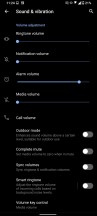
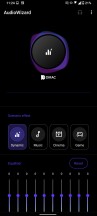
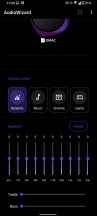
AudioWizard
Lastly, Asus and Dirac have left a little something for you audiophiles. Aside from the 4 preset sound profiles, there's also a 10-bar equalizer at your disposal. And there's also an "Outdoor mode" that boosts the speaker's loudness if it isn't enough.
Stock-ish Android 11 with ZenUI 8
Asus' approach to software has been fairly simplistic over the years, and things haven't changed with Android 11 either. Still called ZenUI, the software is nearly stock with a big serving of custom features on the side. Not counting the ROG theme and a couple of gaming-related functions, the software is quite similar to the ROG Phone 5's. And that's a good thing in our book for anyone looking for a burden-less Android experience.
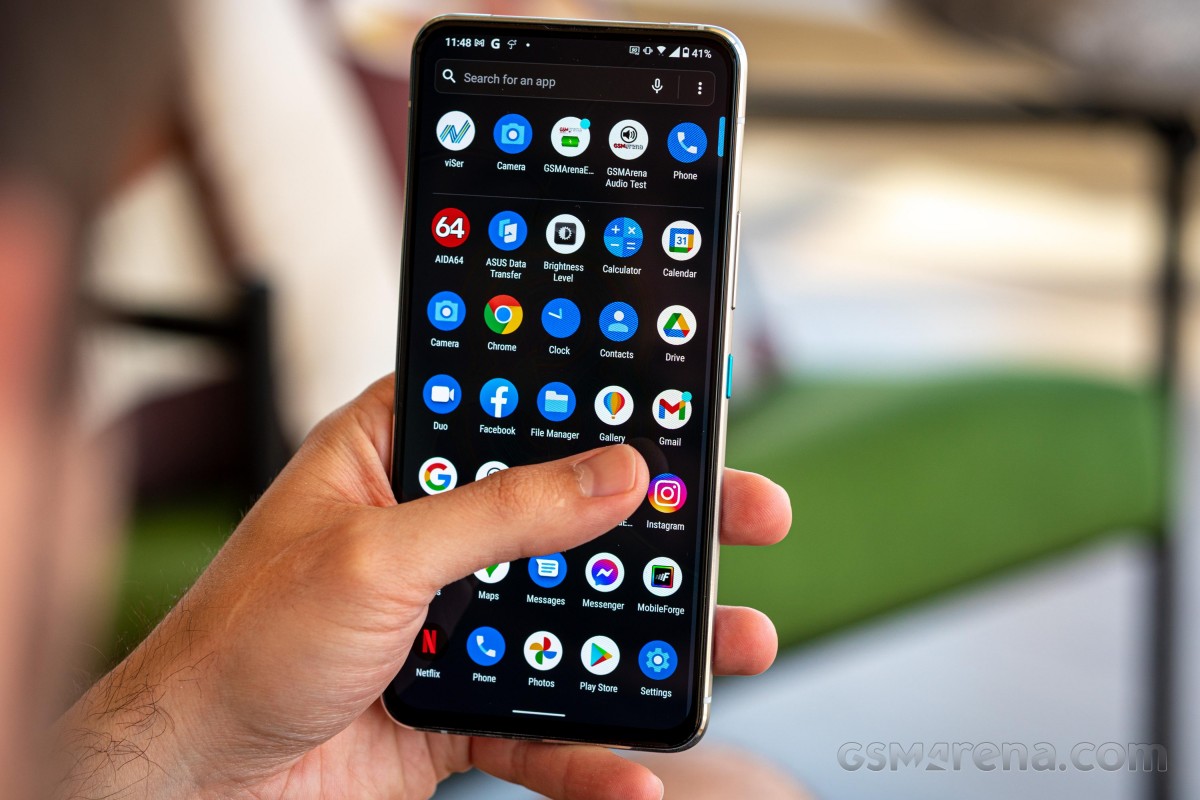
The home screen, app drawer, notification shade and recent apps are fairly familiar with a few small exceptions. Recent apps, for example, offer quick access to the app drawer too. We saw that implementation with Android 9, which was present mostly in Pixels and other vanilla Android phones. The only out-of-the-ordinary elements in the notification shade are the expanding brightness control menu and the power menu, which is rather handy given that the power button can be re-programmed.
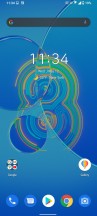
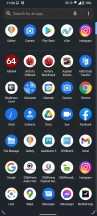
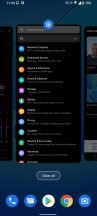
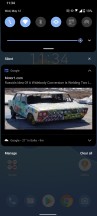
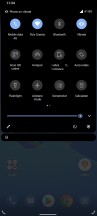
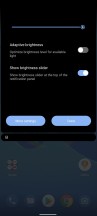
Home screen, recent apps, app drawer, notification shade
Yes, this means the iconic Smart Key feature is still available, so you can assign an action or launch an app using the power button. The two available gestures are double press and press and hold. Also, if you are used to the good old power menu where you have only three options - reset, power off, and emergency call, you can use this style instead.
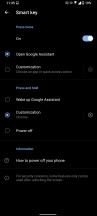

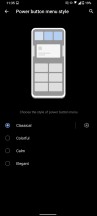
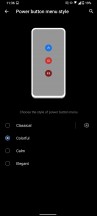
Smart Key and Power menu settings
One of the first things we noticed are the extensive Battery and Display menus. The first one gives you quite a bit of control over apps, system power usage and performance. There are a couple of preset system modes regarding performance and power saving. Each one can be adjusted to your liking, but the Advanced mode gives you all the control you'd probably need.
You can adjust the CPU, GPU and RAM performance, tinker with the thermal limit, adjust connectivity and display behavior, and even lower the screen's touch sampling rate. As a complete opposite of the Advanced mode, the Dynamic one gives full control to the system. Asus says it intelligently adjusts everything to match your current usage and requirements. That's also the recommended mode too.
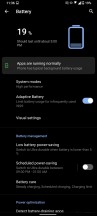
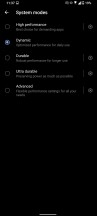
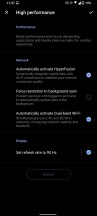
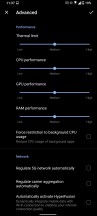
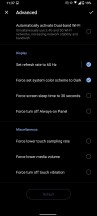
Battery menu
In addition to the standard brightness, HRR, color reproduction, etc. controls, the Display menu also holds several customization options regarding appearance. You can change the icon style, the quick toggles shape, font and accent color. Interestingly enough, Asus has taken out the Animation speed sub-menu usually found in the Developers options, and put it in the Display section. We noticed that some animations may appear a bit slow, perhaps to enjoy the 90fps animations, so having the option to speed up animations is great.
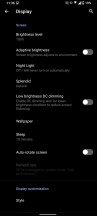
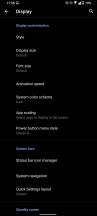
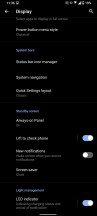
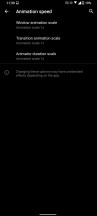
Display menu
Always-on is available, but it offers only three clock styles. A lift-to-wake feature is available as an alternative, but it lights up the whole screen when you pick up the phone. A single tap on the locked screen will only show you the fingerprint reader area.
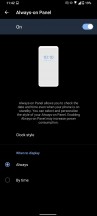
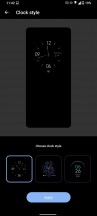
Always-on display options
The placement of the scanner is good, easy to reach and doesn't require finger gymnastics, and once you get used to the exact position of the fingerprint area, you can just tap and hold until it unlocks without having to wait for the icon to light up.
One of the most overlooked features in some custom UIs is the ability to adjust the volume of your notifications and incoming calls separately. Asus' ZenUI allows you to do just that and adds another pretty neat feature called Smart ringtone. It adjusts the ringing volume depending on the surrounding environment and boosts the volume when it's too noisy. And probably this is where we have to complain about the vibration motor. It's strong but far from precise. Even mid-range phones boast crisp vibration patterns for typing, notifications, etc., while the Zenfone 8 Flip keeps the Zenfone 7 Pro's vibration motor, which is just okay.

OptiFlex and one-handed mode
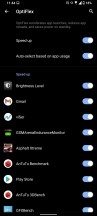
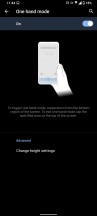
During the Zenfone 8 briefing, Asus highlighted two new features - OptiFlex and the brand new One-hand mode. We will talk about the former extensively in the next section, while the one-handed mode is pretty self-explanatory. But there's a twist. You can activate it with a simple swipe downward close to the bottom edge of the screen. It's a bit inconsistent, though, because if you start swiping a few millimeters higher, the gesture for the drop-down menu will be executed. Last, but not least, you can adjust the maximum height of the One hand mode so if you have bigger hands, you don't really need to limit your space to just half of the screen, for example. Switching back to normal mode is just as easy - a single tap on the blank area re-expands the UI.
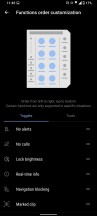
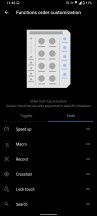
Game Genie
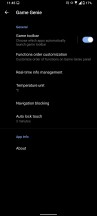
Finally, the Game Genie might not offer so many gaming-related features as the ROG Phone 5, but the necessities are there. You can track real-time stats of the device and call the Game toolbar offering quick access to certain settings. These settings can be re-arranged, added or removed.
Performance
Even though Asus says the Flip isn't its true flagship this year, it still rocks the latest and greatest from Qualcomm - the Snapdragon 888. No corner-cutting here as opposed to other makers that put the Snapdragon 870 instead of the 888 in their complementary flagship models. The chipset is based on the 5nm manufacturing process with unusual architecture. The CPU has a total of eight cores - 1x 2.84 GHz Kryo 680 Prime (Cortex-X1 derivative), 3x 2.42 GHz Kryo 680 Gold (Cortex-A78 derivative) and 4x 1.80 GHz Kryo 680 Silver (Cortex-A55 derivative) while the Adreno 660 GPU does the heavy lifting of graphically-intensive tasks.
The only available memory variant is 8GB/256GB with the storage being UFS 3.1, which is expandable via microSD card of up to 2TB. Quite generous to be honest. Asus also says the handset supports NTFS file system so you can connect an external hard drive too.
Now, when it comes to synthetic benchmarks, there are hardly any surprises. It performs as expected since we've tested quite a few Snapdragon 888 smartphones out there. The reason some of the onscreen tests return better results than other Snapdragon 888 handsets is the fact that most flagships are running QHD+ resolution while the Zenfone 8 Flip has to render fewer pixels at FHD+.
GeekBench 5 (multi-core)
Higher is better
- Asus Zenfone 8 Flip
3673 - OnePlus 9 Pro
3636 - Asus Zenfone 8
3604 - Xiaomi Mi 11
3489 - Samsung Galaxy S21+ 5G
3476
GeekBench 5 (single-core)
Higher is better
- Asus Zenfone 8 Flip
1126 - OnePlus 9 Pro
1126 - Asus Zenfone 8
1118 - Samsung Galaxy S21+ 5G
1091 - Xiaomi Mi 11
1085
AnTuTu 8
Higher is better
- OnePlus 9 Pro
691055 - Asus Zenfone 8
676001 - Asus Zenfone 8 Flip
675851 - Xiaomi Mi 11
668722 - Samsung Galaxy S21+ 5G
622276
AnTuTu 9
Higher is better
- Asus Zenfone 8
799738 - Asus Zenfone 8 Flip
797484
GFX Car Chase ES 3.1 (offscreen 1080p)
Higher is better
- OnePlus 9 Pro
70 - Asus Zenfone 8 Flip
69 - Asus Zenfone 8
69 - Xiaomi Mi 11
67 - Samsung Galaxy S21+ 5G
66
GFX Car Chase ES 3.1 (onscreen)
Higher is better
- Asus Zenfone 8 Flip
62 - Asus Zenfone 8
61 - Samsung Galaxy S21+ 5G
54 - OnePlus 9 Pro
36 - Xiaomi Mi 11
33
GFX Aztek ES 3.1 High (offscreen 1440p)
Higher is better
- Asus Zenfone 8 Flip
28 - OnePlus 9 Pro
28 - Samsung Galaxy S21+ 5G
28 - Asus Zenfone 8
27 - Xiaomi Mi 11
25
3DMark Wild Life Vulkan 1.1 (offscreen 1440p)
Higher is better
- Samsung Galaxy S21+ 5G
5757 - OnePlus 9 Pro
5701 - Asus Zenfone 8 Flip
5677 - Xiaomi Mi 11
5673 - Asus Zenfone 8
5666
In addition, the handset offers a dedicated performance mode, control over temperature and the so-called OptiFlex memory management system. It analyzes which apps to keep open in the background and which ones to shut down. The interesting part is that the OptiFlex system works alongside the built-in Android Adaptive Battery and takes into account the list of apps from the latter.
Camera hardware
The camera hardware remains largely unchanged from last year. We still have Sony's IMX686 64MP, 1/1.7" sensor appointed as the main shooter, binning down to 16MP images natively. The sensor has Dual Pixel AF and is paired with an f/1.8 aperture but no OIS just like there wasn't any on the vanilla Zenfone 7 last year.
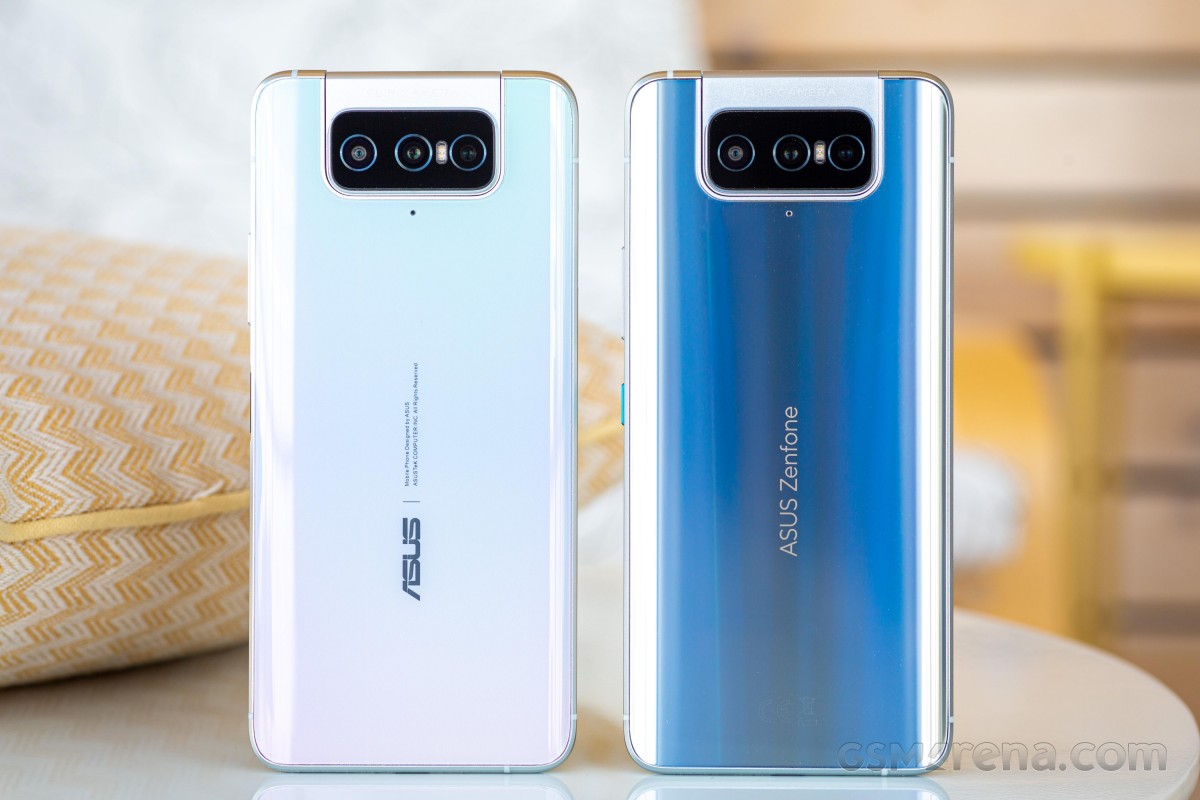
The ultrawide unit retains the Sony IMX363 12MP, 1/2.55" sensor with 1.4µm pixels. The lens is a 17mm equivalent with f/2.2 opening and providing a 112-degree field of view. The specs say it supports up to 4cm focusing distance for close-up macro shots but we couldn't find a dedicated mode for macro, so you just point and shoot.
The telephoto camera re-uses the 8MP OmniVision OV08A sensor paired with a f/2.4 aperture lens, equivalent to 80mm. It gets up to 3x optical zoom, has autofocus, but no OIS again.
Software features and camera app
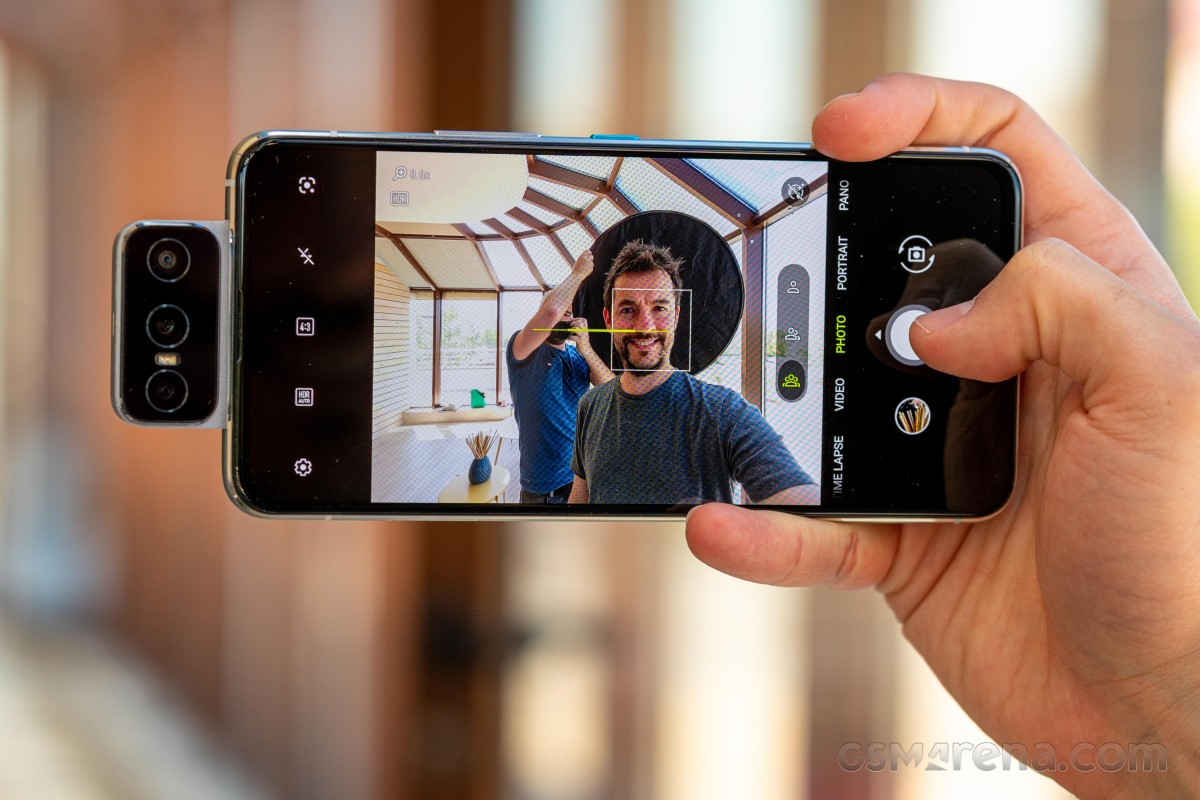
The default camera app is business as usual. All modes are arranged in the carousel formation. The odd one out is the button right next to the shutter, which controls the camera module. Just tapping on it will pop open the Flip. Holding and sliding will adjust the angle of the module. You can do that manually as well; it's allowed.



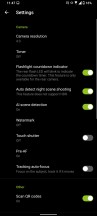
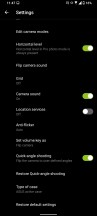
Camera menus
Quick angle presets are at your disposal in pretty much every camera mode. There's an icon on the viewfinder. You can save a certain angle on the quick toggles and then reset these positions to their default state in the main Settings menu of the camera.
Shooting panoramas or tracking a moving object in a video can be done so automatically using the Flip module.
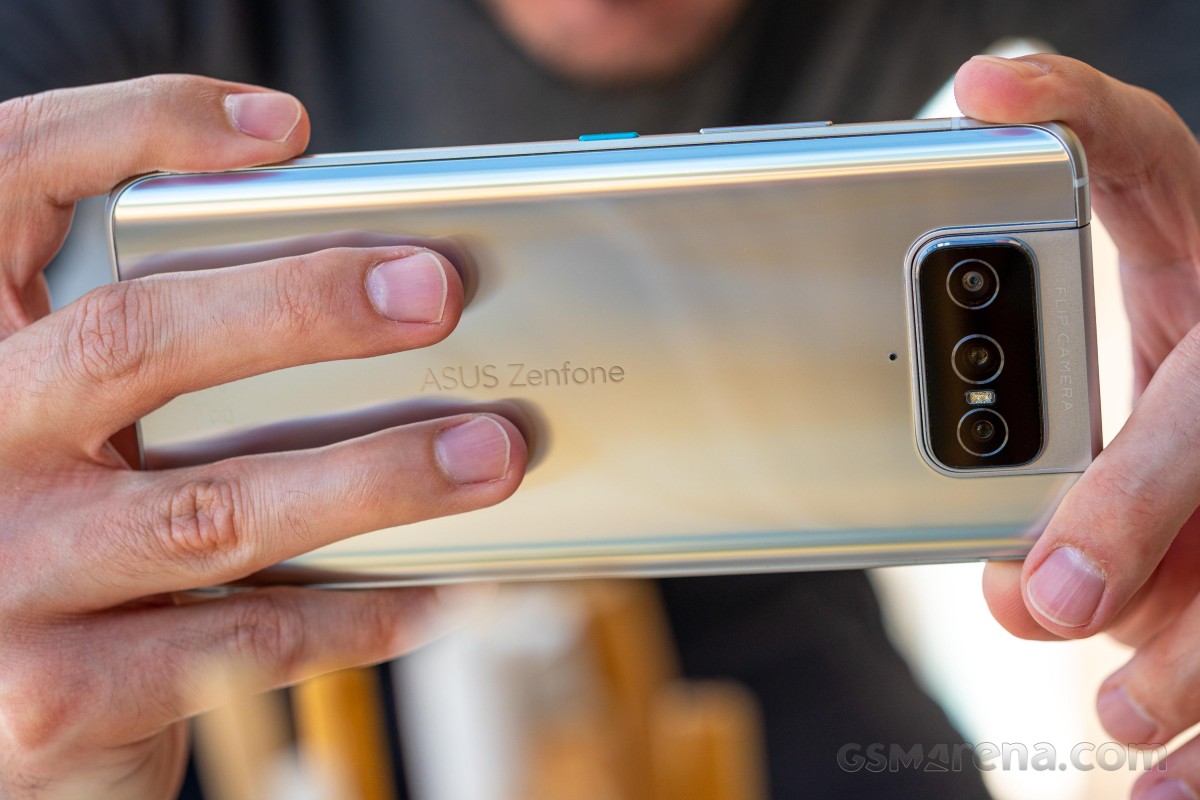
Of course, there's no dedicated Selfie mode; you just open the Flip and shoot using the default Photo mode or the Portrait mode for extra glamour. The Night mode is hidden in the More sub-menu, but you can always re-arrange the modes to your liking in the settings.
The Pro mode is particularly interesting as it gives you full control over the three cameras' settings, and you can even save a custom preset of the settings, so you don't have to re-adjust everything each time you open up the Pro mode. A Pro Video mode is also available, which aside from the ISO, white balance, exposure, manual focus and microphone control, also gives you smooth and steady control over zooming. Saving your stills in RAW format is possible too.

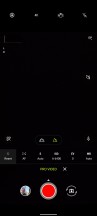
Video and Photo Pro modes
Since the handset has a 3-array microphone, it supports acoustic, and mic focus and all mics have wind filters. And for the real enthusiasts, Asus gives you full control over the microphones so you can decide how they work and how they receive the ambient sound.
A dedicated Document mode allows you to take clearer photos of documents and then the software would auto crop and save the file into PDF.
Daylight samples
Main camera
Not much has changed since the previous iteration of the phone. Daylight shots are still excellent, with a high level of detail and looking extra sharp. In fact, the foliage looks sharper than before, and so do the buildings in the distance. The dynamic range is wide enough to keep the highlights and shadows balanced. Colors are vivid, and yet, Asus keeps it somewhat within a reasonable range of accuracy.






16MP daylight samples
Even the slightest drop in light results in added noise and loss of detail. Take a look at the couch and the furniture and the carpet on one of the indoor samples - detail from the fabric is non-existent. Getting close to the subject yields good results, though.
And kudos to the camera for pulling off the challenging shots of the two cats where the light is anything but ideal.








16MP daylight samples
We did some direct comparison with the Asus Zenfone 7 Pro as well and as we already mentioned above, there is hardly any difference except how colors are rendered.



Main camera shootout: 8 Flip • 7 Pro



Main camera shootout: 8 Flip • 7 Pro
Shooting in the full 64MP resolution is possible, and these photos look pretty good. If you are mostly after detail, you get that in abundance, but the HDR algorithm seems to be disabled in this mode, so well-lit sceneries are recommended. Zooming aggressively will uncover some of the noisy patches in photos, too.







64MP daylight samples
Telephoto camera
The telephoto unit's processing gets pretty close to that of the main camera but since it lacks resolution, sharpness and detail aren't impressive. At least when compared to full-fledged flagships. The HDR is doing a really good job, on the other hand, and color reproduction seems to be in line with the main camera's. Indoor shots do get a bit noisier, but there isn't a noticeable deterioration in overall quality.









Daylight telephoto samples
In comparison to the Zenfone 7 Pro, we'd say the cameras are again identical with the most noticeable difference being color reproduction and the slightly more accurate exposure on the 8 Flip.




Telephoto camera shootout: 8 Flip • 7 Pro
Ultrawide camera
As expected, the ultrawide camera isn't stellar, but it's also not far behind your average ultrawide camera for the class. Even though it's 12MP, it leaves much to be desired in terms of sharpness and detail. Color reproduction, dynamic range and lens correction are all giving us a reason to rate the camera higher, not to mention there's no obvious color fringing, which is often an issue with ultrawide snappers.










Daylight ultrawide samples
Again, image quality is identical between the Zenfone 8 flip and the outgoing model.





Ultrawide camera shootout: 8 Flip • 7 Pro
Low-light samples
Using the default Photo mode for nighttime shooting probably won't give you the desired results as photos are often noisy, soft and can sometimes lack contrast. Light sources and highlights are often clipped, showing a tendency for brighter exposure, which also explains the bright and detailed shadows. And by detailed, we mean that you can clearly see what's going in there, but it's often ruined by grain and fuzziness. The noise reduction algorithm often washes away some detail, too.






Main camera low-light samples
Still, the new software seems to be doing a better job than before for low-light photography. At least as far as sharpness and fine detail are concerned. You can see a noticeable improvement in dynamic range and contrast too.






Low-light shootout: 8 Flip • 7 Pro
Switching on the Night mode gives you a toggle with two options - 4 and 6 seconds of simulated exposure. Going for the second option is advisable if you have the opportunity. It produces considerably clearer images and resolves more fine detail. And depending on the scene, the software may go for a brighter exposure too, brightening up the scene quite a bit.










Night mode: 4s • 6s
No matter which of those two modes you select, as long as you use the Night mode, you will see a considerable improvement in sharpness, noise, detail, contrast and dynamic range. The noise in the shadows is removed without sacrificing fine detail. Light sources look more balanced and well-contained. Nevertheless, we would like to stress that going for the longer exposure is advisable for the best possible results. In fact, with this 6s toggle, we can say definitely say that the Zenfone 8 Flip has one of the best Night modes in town.
Interestingly enough, comparing the Night modes of both handsets produces interesting results, to say the least. The two phones often trade blows, but perhaps the Zenfone 7 Pro comes out on top, at least when it comes to the standard 4 seconds exposure. Another thing to note here is that the older Zenfone prefers warmer white balance too.







Night mode shootout: 8 Flip • 7 Pro
Even though the 7 Pro seems to be more consistent with its shooting, the Zenfone 8 Flip is still a pretty good night shooter. Perhaps a future update would fix some of the small issues we outlined.
Telephoto camera
Unlike some phones, the Zenfone 8 Flip prioritizes its actual telephoto camera for night shots instead of cropping from the main sensor. In any case, the end result isn't stellar. There's plenty of grain in the sky and on uniform backgrounds. Understandably sharpness and detail are lacking too and sadly, there's no Night mode that can save the telephoto camera here.



Low-light telephoto samples
Compared to the Zenfone 7 Pro, the 8 Flip doesn't bring any improvements over its predecessor.


Low-light telephoto shootout: 8 Flip • 7 Pro
Ultrawide camera
As one would expect, the ultrawide unit is no match for the harsh low-light conditions. Images taken with this camera are often fuzzy, almost looking out of focus, and super noisy.





Low-light ultrawide samples
Luckily, there's a Night mode that can save your nighttime ultrawide shots. It introduces much-needed sharpness into the scene, resolves considerably more detail and restores the highlight/shadows balance. Noise is hard to see too.





Ultrawide camera Night mode
Put against the Zenfone 7 Pro, we see little to no difference, no matter if its the standard Photo mode or Night mode when using the ultrawide camera. Safe to say there are no changes in the ultrawide unit's processing.





Low-light ultrawide shootout: 8 Flip • 7 Pro





Night mode ultrawide shootout: 8 Flip • 7 Pro
Get ready for some more pixel-peeping with our photo compare tool to see how the Asus Zenfone 8 Flip compares to its rivals.
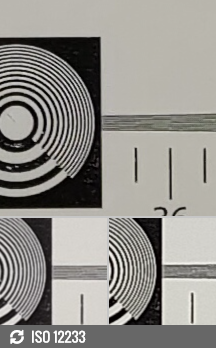
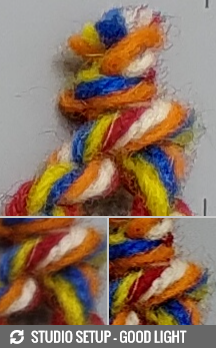

Asus Zenfone 8 Flip vs Samsung Galaxy S21+ 5G and the OnePlus 9 Pro in our Photo compare tool
Portraits
Interestingly, the software crops from the main camera when shooting portraits, and there's no way to turn it off. The portraits are upscaled back to 16MP, though, but there is some level of zoom. As far as quality is concerned, the phone captures some fine portraits with convincing faux bokeh. Even in more challenging conditions, the software manages to keep the subject's face exposed and balanced. Some noise starts to creep in when there's not sufficient light but can be noticed only if you zoom enough (take a look at the second picture).





Portrait samples
Overall, portraits look great and edge detection works (almost) flawlessly.
Selfies
Having three proper cameras that can be used for selfies is a game-changer for all of you selfie lovers. It's needless to say that the telephoto won't be of much use in this case, especially with its 3x zoom. Anyway, the selfies taken with the main camera are hard to match, no matter the lighting conditions. You get sharp-looking selfies and detail isn't missing even in more challenging scenes. The subject's skin tone is a bit on the pale side but still manages to capture that natural reddish glow. Dynamic range is excellent.










Selfies: Normal • Ultrawide • Normal • Ultrawide • Normal • Ultrawide




Portrait selfies
Shooting with the ultrawide camera will understandably produce softer-looking images but compared to competing phones with dedicated ultrawide selfie units, the Zenfone 8 Flip blows everyone out of the water. The main advantage of the current setup, however, remains and that's the autofocus. That's a rare feature on selfie cameras so not having to worry about focusing distance in your selfies is a big deal.
Having a proper camera setup for selfies ensures good selfies even in extreme conditions. The dedicated Night mode can help with that too. We took a couple of Night mode selfies to see what's up, and we were delighted with the results. It would be unrealistic to expect crisp images in such conditions, but the software manages to get the most out of the situation. Despite the subject's softness, the face is always well exposed and some fine detail can be spotted throughout all scenes too. The ultrawide struggles in these situations but it's still fairly usable.



Main camera Night mode selfies


Ultrawide camera Night mode selfies
Video recording
Just like every flagship nowadays, the Zenfon 8 Flip supports up 8K (7680x4320) video recording, which in this case is even electronically stabilized. There's also the dedicated action camera-like video recording mode called HyperSteady but this one caps at 1080p@60fps.
The 8K video is looking nice. It has the detail, noise is virtually non-existent, contrast is great, colors are vivid, yet not over the top.
The same applies to the 2160p, except for the choppiness. And even though the 4K video has a lower resolution, it's hard to tell the difference between 8K and 4K even when zooming. Excellent sharpness here.
We were pleasantly surprised by the ultrawide camera's video recording. The sample video looks in line with the main camera's videos in terms of processing and it's plenty sharp for an ultrawide too.
As we already mentioned, the HyperSteady video mode is capped at 1080p and to further enhance that action camera-like feel, the frames per second are 60 by default. This video mode provides super smooth video capture with minimal decrease in quality (for a 1080p video, that is) but some sudden adjustments of the frame can be seen. Panning looks rather smooth too, though. Still, we've seen better stabilization from competitors. This may change with a future update if Asus resolves the strange sudden adjustment behavior.
Since the phone supports stabilized 8K videos, we couldn't miss the opportunity to find out. Especially on a windy day to test the wind filters too. We flipped the wind cancelation switch and it seems to be definitely something more than just a gimmick. Wind noise is, for all intends and purposes, gone. However, the mics in this mode seem to be pretty sensitive and pick up noise from afar.
And as far as stabilization goes, it looks okay for the most part except for the shaky effect that occurs with some sudden movements. Give it one more generation. For now, we recommend sticking to the 4K EIS video mode, it's looking really good. Which leaves us to our next set of videos.
Asus markets the phone as an ideal entry-level vlogger device and it's hard to deny that. Expect some crisp and colorful selfie videos, which are also well-stabilized.
The same can be said about the ultrawide camera and despite clipping some parts of the bright background, the subject's face gets the correct exposure.
Once you are done with the real-world examples, take a closer look at our video compare tool to see how the Asus Zenfone 8 Flip stacks against the competition.
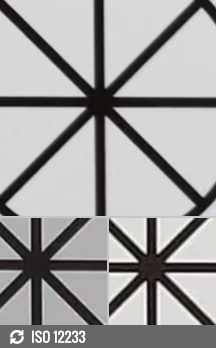


2160p: Asus Zenfone 8 Flip vs Samsung Galaxy S21+ 5G and the OnePlus 9 Pro in our Video compare tool
Competition
The Asus Zenfone 8 Flip has got all bases covered with the latest top-of-the-shelf processor, a full set of cameras, a great 90Hz AMOLED with an under-display fingerprint reader and a generous battery capacity.
However, it's no longer the unique smartphone it was last year because it's mostly identical to the Asus' own Zenfone 7. The Zenfone 8 Flip (€800) not only launches for €100 more than what the Zenfone 7 used to cost at launch, but this older model is already down to less than €500. Sure, the Zenfone 8 Flip gets you twice the storage, the latest processor and an under-display fingerprint reader, but other than that - the user experience, the battery life and the camera quality are essentially the same.
Then there is the Samsung Galaxy S21+ 5G. Since its release was held a couple of months ago, you can already find it for just around €800, making it a direct competitor to the Zenfone 8 Flip. It's hard to top the S21+'s gorgeous 120Hz OLED and its proficient camera setup. Battery life seems to be measurably better too. The water and dust protection are a nice bonus.
The unmatched selfie experience and the rather clean ZenUI software with niche features are the only considerable advantages over its rival. If you are reading this review a couple of months after the release of the Zenfone 8 Flip, it might even be the better deal of the two.

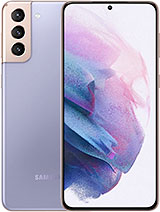


Asus Zenfone 7 • Samsung Galaxy S21+ 5G • Xiaomi Mi 11 • OnePlus 9 Pro
A more affordable alternative would be the vanilla Xiaomi Mi 11. Asking €50 less than the Zenfone 8 Flip, the phone is well equipped and offers pretty much everything a modern flagship would. Except for the telephoto camera. The display is also faster, sharper and brighter.
And if you are in for the stock-ish Android, the OnePlus 9 Pro might interest you - especially if you get it cheaper from a third-party seller and not directly from OnePlus. You get roughly the same camera experience (except for the ultrawide, which is considerably better), much faster charging, and a better and faster display. Going the Zenfone 8 Flip path will get you better battery life and, once again, a better selfie experience.
Verdict
There are hardly any ways we would improve the Asus Zenfone 8 Flip. The only things we could wish for are better battery life, and, perhaps, a higher refresh rate for the display.
The Zenfone 8 Flip is already a great smartphone, and it offers a snappy user experience. Some rare-to-find features such as the dual SIM slot with microSD card support, the full-screen frontal design, the LED notification light, and the 256GB base internal storage might be just enough to tip the scales.
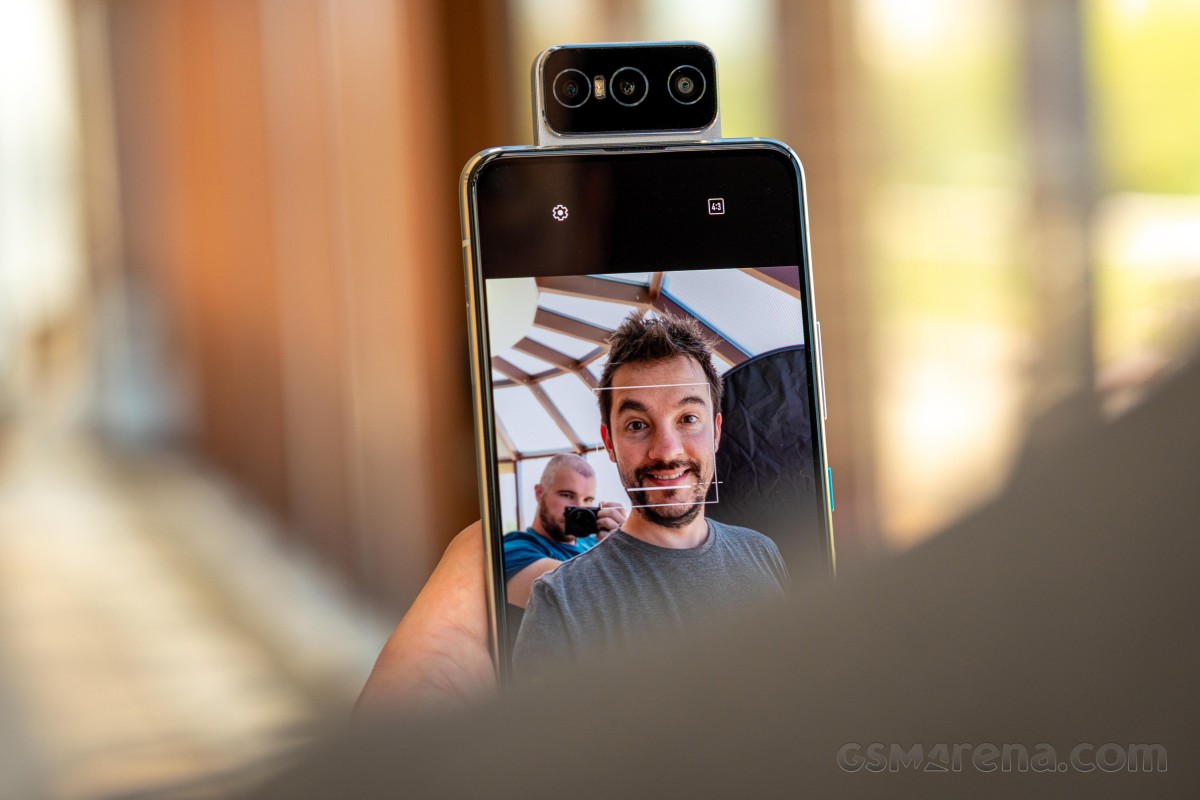
Camera quality is already excellent as it is, and the flip camera is an intriguing element that may lure the selfie-lovers or vloggers. Unless, of course, they already have a phone with a flip camera - because last year's Zenfone 7 offered the same formula.
In this sense, the Zenfone 8 Flip is neither cheap nor unique, and that might make it a tough sale for a challenger brand like Asus. Unless they somehow make the Zenfone 7 vanish into thin air, it's tough to recommend the new, more expensive model for the few upgrades it offers. The good news is Asus probably wouldn't mind whichever model you pick up - and both deserve a consideration.
Pros
- Good build quality, the flip camera mechanism has been proven in time.
- Bright, full-screen 90Hz OLED.
- Clean Android with a sprinkle of nifty value-adding features.
- Good stereo speakers.
- Dedicated microSD card slot and 256GB base storage.
- Great camera experience, proficient video capturing, unrivaled selfie game.
Cons
- High launch price - you can find phones with faster displays and IP 68 in this segment.
- Few upgrades over the Zenfone 7.
- Charging is not very fast.
0 Response to "Asus Zenfone 8 Flip review"
Post a Comment